Home Buying
Sewer Camera Inspections: What They Reveal Before You Buy a Home
Your home inspector will not look at the one pipe that can cost five figures. Forty minutes with a camera closes that gap.
Standard home inspections are genuinely useful. They cover the roof, the electrical, the furnace, the visible plumbing and a hundred other things.
They do not cover the sewer lateral — the pipe running from your house to the municipal main, typically thirty to seventy feet of it, four to eight feet underground. The inspector runs a faucet, watches it drain, and moves on.
That is the one pipe on the property that can cost five figures to fix, and it is the one nobody looks at.
What the camera actually finds
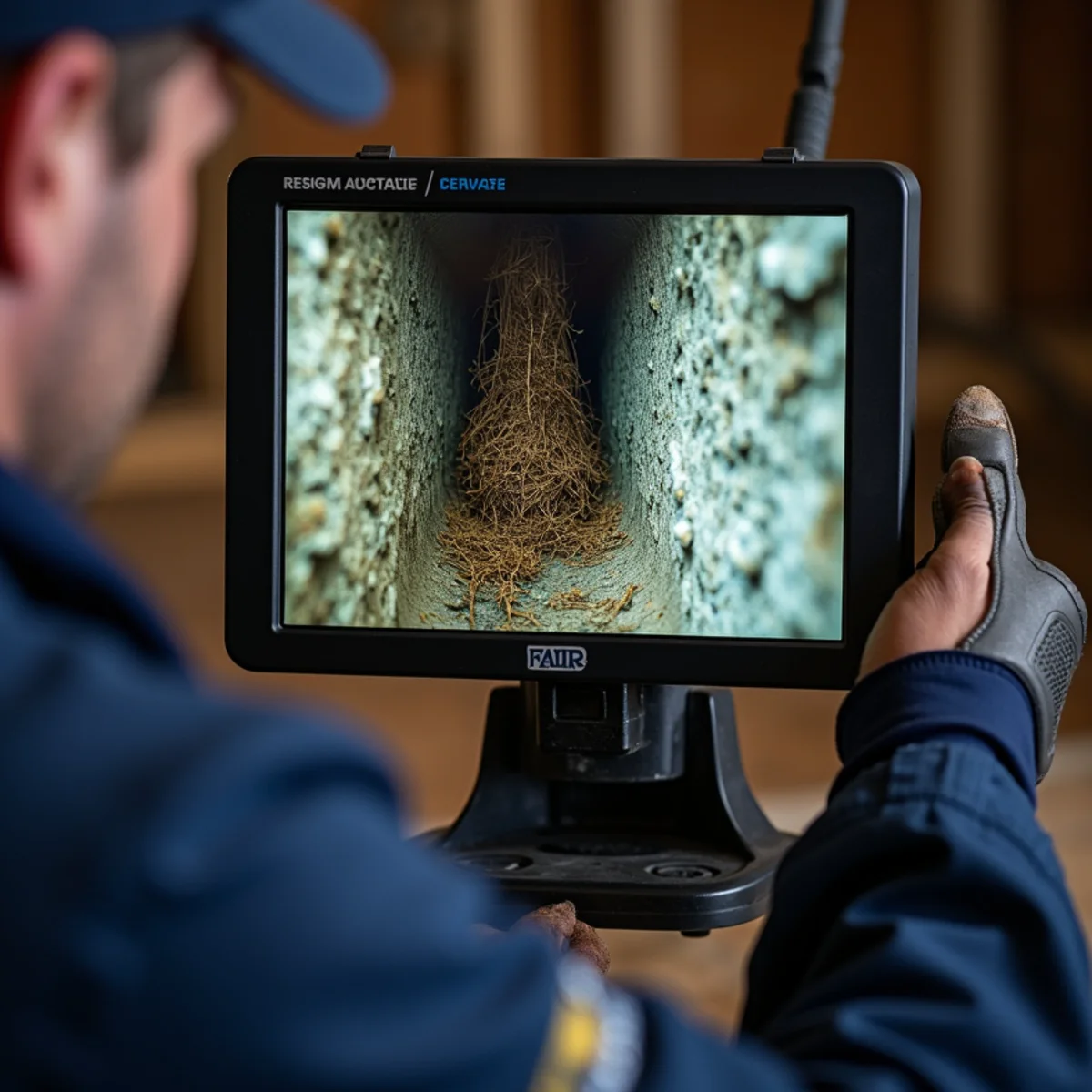
A self-leveling camera goes in at the cleanout and travels to the municipal tap, recording the whole run. Here is what shows up.
- Root intrusion — the most common finding in older neighborhoods, visible as a curtain of fibers at a specific joint.
- Bellies — low spots holding standing water where the pipe has sagged from soil settlement. These clog on a schedule forever until they are re-sloped.
- Cracks and offsets — separated joints where sections have shifted apart. Soil enters, sewage exits.
- Collapsed sections — pipe that has failed structurally. Not repairable by cleaning at any price.
- Pipe material and age — clay tile, cast iron, Orangeburg or PVC. Material alone tells you a great deal about remaining life.
- Scale and grease buildup — heavy coating narrowing the pipe, common in this village's hard water.
- Improper connections — a previous owner's basement bathroom tied in badly, or a downspout illegally connected to the sanitary line.
Which homes most need one
Any home built before about 1980, especially with mature trees near the line. Clay tile laterals plus sixty-year-old root systems is the classic combination.
Any home where the seller mentions a backup, or where you notice a floor drain that looks like it has seen water.
Homes in older Crystal Lake, Cary, McHenry, Woodstock, Carpentersville and the Dundees, where the housing stock predates modern sealed pipe.
Homes with a finished basement, because that is where a future backup does the most damage.
Homes with a long lateral to the street or a lateral running under a driveway, patio or mature landscaping — where repair costs climb because of what is on top of the pipe.
In newer subdivisions like Huntley, Gilberts and Cambridge Lakes, structural sewer problems are rare. It is still not a wasted forty minutes, but the odds are genuinely lower.
What it costs and what it saves
A sewer camera inspection is one of the more affordable diagnostic services in plumbing — a small fraction of a lateral replacement, and comparable to what people spend on a radon test without hesitating.
The asymmetry is the point. If the line is sound, you have paid a modest amount for documented footage and a clear conscience. If it is not, you have found a four or five-figure problem while you still have negotiating leverage.
That leverage is real. A seller facing a documented failing lateral typically credits the repair, fixes it before closing, or adjusts the price. After closing, it is entirely yours.
How the appointment works
We need access to a cleanout — usually in the basement, sometimes outside near the foundation. If the home does not have an accessible cleanout, we will discuss options before the visit rather than surprising you on site.
If the line has standing water or debris, we clear enough to see. A camera cannot read a line full of sludge.
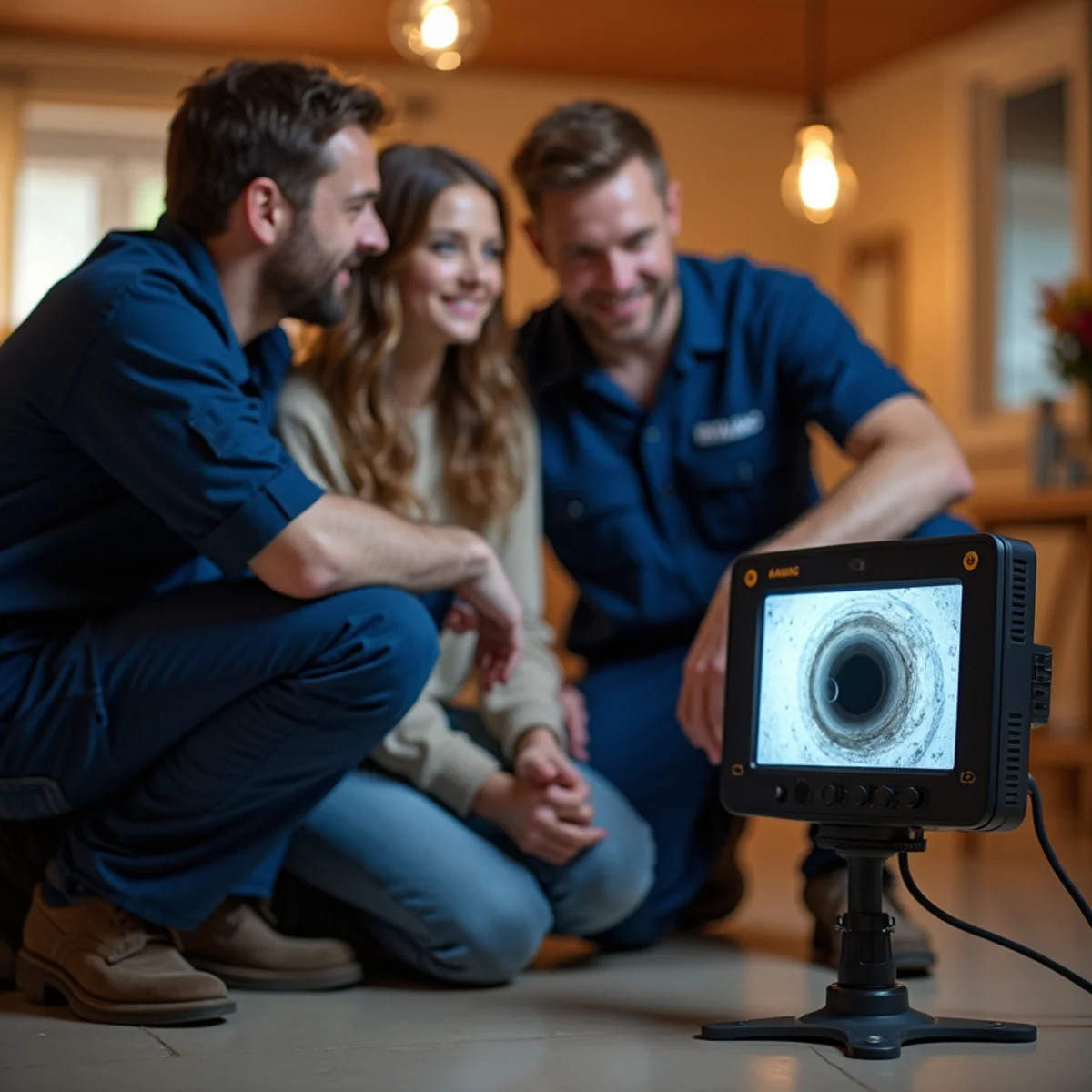
Then we run the camera the full length, narrating what we see. You are welcome to be there, and we encourage it — watching your own pipe is more informative than reading a report about it.
You get a copy of the footage and a plain-language summary: material, condition, any defects, their locations and depths, and what each would take to address. That document is what you hand to your agent.
What to do with what you find
Minor root intrusion at one joint in otherwise sound pipe is a maintenance item, not a deal-breaker. Know about it, budget for periodic cleaning, and decide whether a spot repair is worth doing early.
A belly is more serious because it will clog indefinitely until the section is re-sloped, and a trenchless liner will not fix it — liners follow the existing slope.
Cracks, offsets and collapse are structural, and they should be priced into the transaction. There is no cleaning schedule that makes a broken pipe work.
If you want a second opinion on a report you already have, we will look at footage and tell you honestly what we see. Our sewer line repair and camera inspection page covers the repair options in detail, and our guide to tree roots in sewer lines explains the most common finding.
Quick answers
Is a sewer scope worth it when buying a house?
On any home built before roughly 1980, or any home with mature trees near the line, yes. It costs a small fraction of a lateral replacement, and finding a problem before closing is the difference between a seller credit and a bill that is entirely yours.
Does a home inspection include the sewer line?
No. Standard home inspections stop at visible plumbing. The buried lateral between the house and the municipal main is not inspected unless you specifically hire someone to camera it.
What if the house does not have a sewer cleanout?
There are usually other access options, though they can require pulling a toilet. We will discuss it before the appointment rather than arriving and improvising. Worth noting: a home with no accessible cleanout is itself a small red flag.
Need a hand with this?
Talk to the plumber who wrote this
We are a licensed, owner-operated shop on Pine Street in Lake in the Hills. Free written estimates on non-emergency work, and a real person answering the phone when it cannot wait.
- 5.0 from 11 Google reviews
- Licensed & insured
- 24/7 emergency service