Leak Detection & Repair
Find the hidden leak before you open the wall — acoustic, thermal and pressure diagnostics, then a proper repair.
Learn more

Artisan Water Group
Repiping is the plumbing job homeowners put off longest and regret waiting on most. It is not glamorous, nobody sees it, and it costs real money. But when a system is done, it is done, and patching it becomes the expensive option.
Need this handled today? Call and a real person answers — nights, weekends and holidays included. You get the price before we start.
The clearest case is galvanized steel. Homes built here in the 1970s and into the early 80s often have galvanized supply lines, and galvanized corrodes from the inside out. The scale grows inward until a three-quarter-inch pipe has a half-inch of actual opening left. That is why pressure drops at every fixture at once, why hot water runs rusty in the morning, and why nothing you replace at the fixture makes any difference.
The second case is copper that has started producing pinholes on the same run. The third is a house that has simply had enough leaks that the repair budget now exceeds the replacement budget. All three end the same way, and doing it deliberately is far less painful than doing it after a failure.
One of these alone might be something else. Two or three together is a system telling you it is done.
If replacing the shower head and cleaning every aerator changed nothing, the restriction is inside the pipe. Galvanized closes down uniformly across the whole system.
Sediment settles overnight and comes out with the first draw. If it clears after a minute and returns the next morning, you are watching your pipes dissolve.
Two or three failures on one run in a couple of years is a pattern, not bad luck. The next one is already forming.
Green-white crust at copper joints, or rust blooming at threaded galvanized connections. Both mean the metal is losing the argument.
Hot lines scale faster because minerals precipitate out at temperature. A big hot-cold imbalance is a classic hard-water symptom in older piping.
If walls are opening for a kitchen or bath remodel, the marginal cost of repiping while access is free is a fraction of doing it later.
It is less disruptive than people fear, as long as it is sequenced properly.
We trace every run, identify materials, note where the pipe is accessible and where it is buried in finished space, and plan the shortest sane path for the new piping.
Before anything opens, you see where access holes will be, which walls stay closed, how many days it takes, and what the water schedule looks like. No surprises mid-job.
PEX is flexible, resists freeze damage better, fishes through existing framing with far fewer openings, and installs faster. Copper is rigid, proven, and preferred by some homeowners for exposed runs. We use both and will explain the trade-offs for your house rather than the ones easiest for us.
We work zone by zone, and the water is back on at the end of each day. Nobody spends a week without a working bathroom.
A proper whole-home shutoff, accessible fixture stops, a softener loop, hammer arrestors and correctly sized branch runs. This is the moment to fix everything the original install skipped.
The system is pressure tested and inspected under permit before anything closes up. We patch drywall to a paint-ready finish and tell you clearly what is on us and what is on your painter.
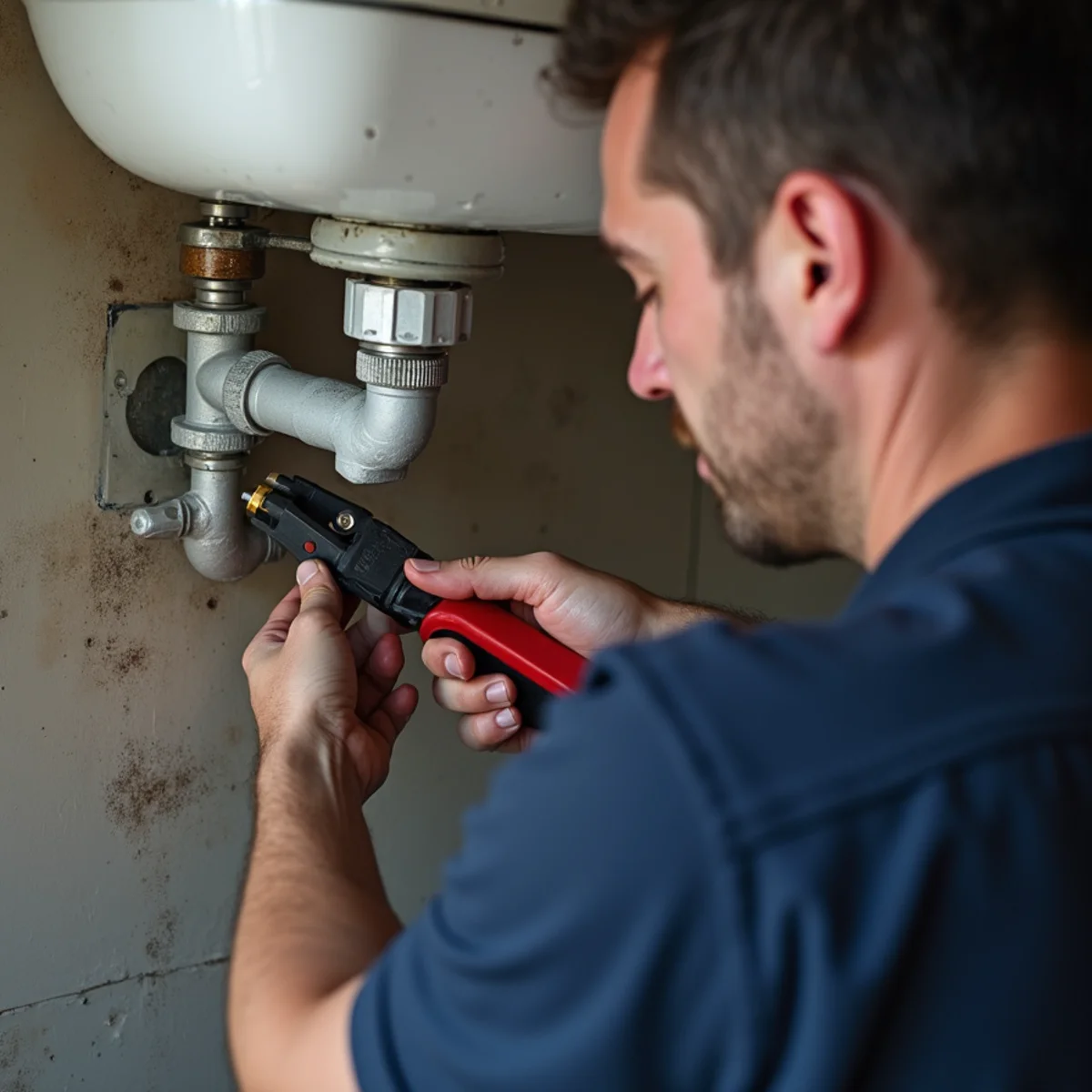
PEX is cross-linked polyethylene tubing. It flexes, which lets it run through existing framing with dramatically fewer openings, and it tolerates a freeze far better than rigid pipe — it can expand and often survives where copper splits. It does not corrode, it is quiet, and it costs less installed. It should not be run in direct sunlight, and it needs proper support and correct fittings.
Copper is rigid, sixty-plus years of track record, and looks right on exposed mechanical runs in a utility room. It is also more expensive, slower to install, needs more wall openings, and in the wrong water chemistry it is what develops the pinholes that brought you here in the first place.
For most Lake in the Hills repipes, PEX in the walls with copper stub-outs at fixtures and copper on visible mechanical runs is the best of both. But it is your house, and if you want copper throughout, we will do that properly too.
Many Lake in the Hills homes built before the mid-1990s have no accessible whole-home shutoff inside the house. There is a curb stop out at the parkway that needs a special key and, often, the Village.
That means when a supply line fails at 1 a.m., the homeowner has no way to stop the water. The difference between a five-minute leak and a two-hour leak is the difference between a repair and a remediation — realistically the difference between a few hundred dollars and five figures.
Adding an accessible main shutoff is not expensive and does not require a repipe. It is one of the highest-value small jobs available to an older home in this village, and we will happily do it as a standalone visit. If you are already repiping, it is included as a matter of course.
Repiping a house and then feeding the new pipe raw 27-grain water is like putting new tires on a car with a bent axle. It works for a while.
Scale accumulates fastest on hot lines and inside fixture valves, so the new system starts down the same road the old one traveled. Installing a properly sized softener at the same time as a repipe is the natural pairing, and it costs less to do the loop while the walls are already open.
It is also the moment to add a whole-home shutoff, hammer arrestors on quick-closing appliance valves, and correctly sized branch lines so the shower does not lose pressure when the dishwasher fills. Our water softener installation page covers sizing for our specific hardness.
Repipe quotes vary widely, and almost all of the variation is access and scope rather than pipe.
We quote repipes in writing after walking the house, with the scope and the day-by-day plan spelled out. Free estimates, no obligation.
Most single-family homes here take two to five working days depending on size and access. We work in zones and restore water at the end of every day, so you are never without a working bathroom overnight.
No. There is dust and there are open access holes for a few days, but the house stays livable and the water comes back on each evening. Most families stay put through the whole job.
For residential supply lines, yes — and in some ways better here. PEX handles a freeze more forgivingly, does not corrode, installs with far fewer wall openings, and costs less. Copper is still excellent and we install plenty of it, particularly on exposed mechanical runs.
Look at the pipe where it comes out of the floor near the water heater. Galvanized is dull silver-grey steel with threaded fittings and a magnet sticks to it. Copper is unmistakably copper-colored with soldered joints. If it is galvanized and the house is from the 70s or early 80s, low pressure and rusty water are almost certainly the pipe.
If the restriction is corrosion inside the pipes, yes — dramatically, and it is the most satisfying result in this trade. If the cause is a failed pressure regulator or a municipal supply issue, repiping will not help, which is why we test pressure at the source before quoting anything.
Often needed together
These come up on the same houses more often than not.
Find the hidden leak before you open the wall — acoustic, thermal and pressure diagnostics, then a proper repair.
Learn moreWhole-home softeners sized for real 26–28 grain water — plus repairs, resin service and salt guidance for the system you already own.
Learn moreKitchen, bath and utility faucets — repaired or replaced with the ceramic-disc, solid-brass parts that survive 26–28 grain water.
Learn moreWorth reading first

Short answer: yes, and it is not close. At 26 to 28 grains per gallon, our water is roughly six times harder than the national average. Here is what that actually does to your house.
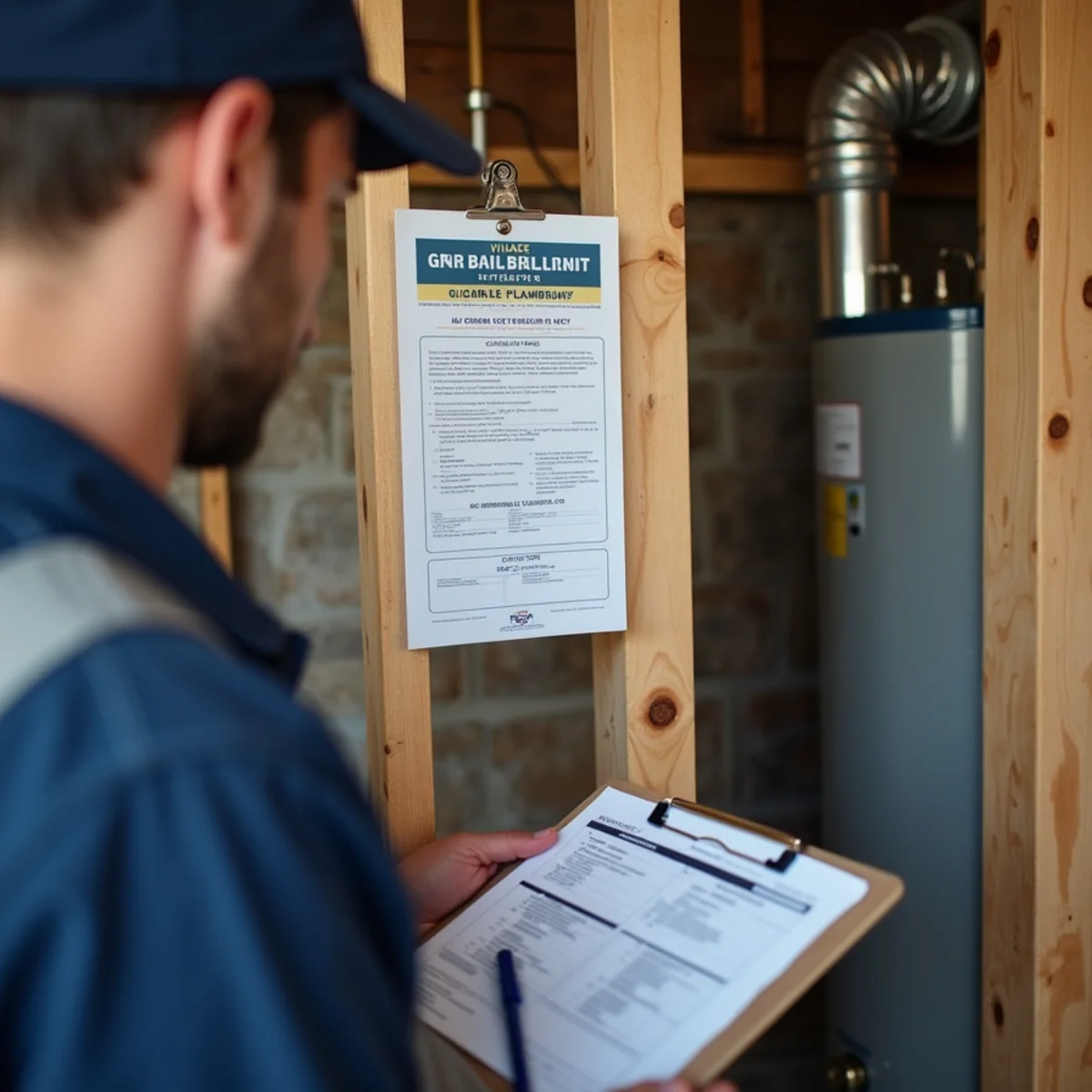
Permits feel like paperwork until you file an insurance claim or sell the house. Here is what actually requires one and why it protects you.
Whole-Home Repiping
Call and talk to the person who will do the work. Free written estimates on non-emergency whole-home repiping, and a price before we start on anything urgent.
Tell us what is going on and we will get back to you with a straight answer. No obligation, no pressure.
5.0 from 11 Google reviewsLicensed & insuredFree written estimates
Our online form is not taking submissions just yet.
Please call (207) 419-2600 instead — a real person answers, nights and weekends included, and we can usually sort it faster on the phone anyway.
We are a licensed, insured, owner-operated shop based on Pine Street in Lake in the Hills. That means the person quoting the job is the person doing it, and nobody here is measured on how much they sold you.
Every recommendation starts with the water. At 26–28 grains per gallon, our supply is roughly six times harder than the national average, and it is the single biggest factor in how long anything in your plumbing lasts. Fixing the symptom without addressing that is how you end up calling someone again in two years.
And when a permit is required — water heaters, sewer work, gas piping — we pull it and show the fee on its own line. Ask every plumber you talk to for the same. Read more in our guide to plumbing permits in McHenry County.