Sewer Camera Inspection
A recorded look inside your lateral, watched on the monitor with you — the only honest basis for a sewer repair quote.
Learn more
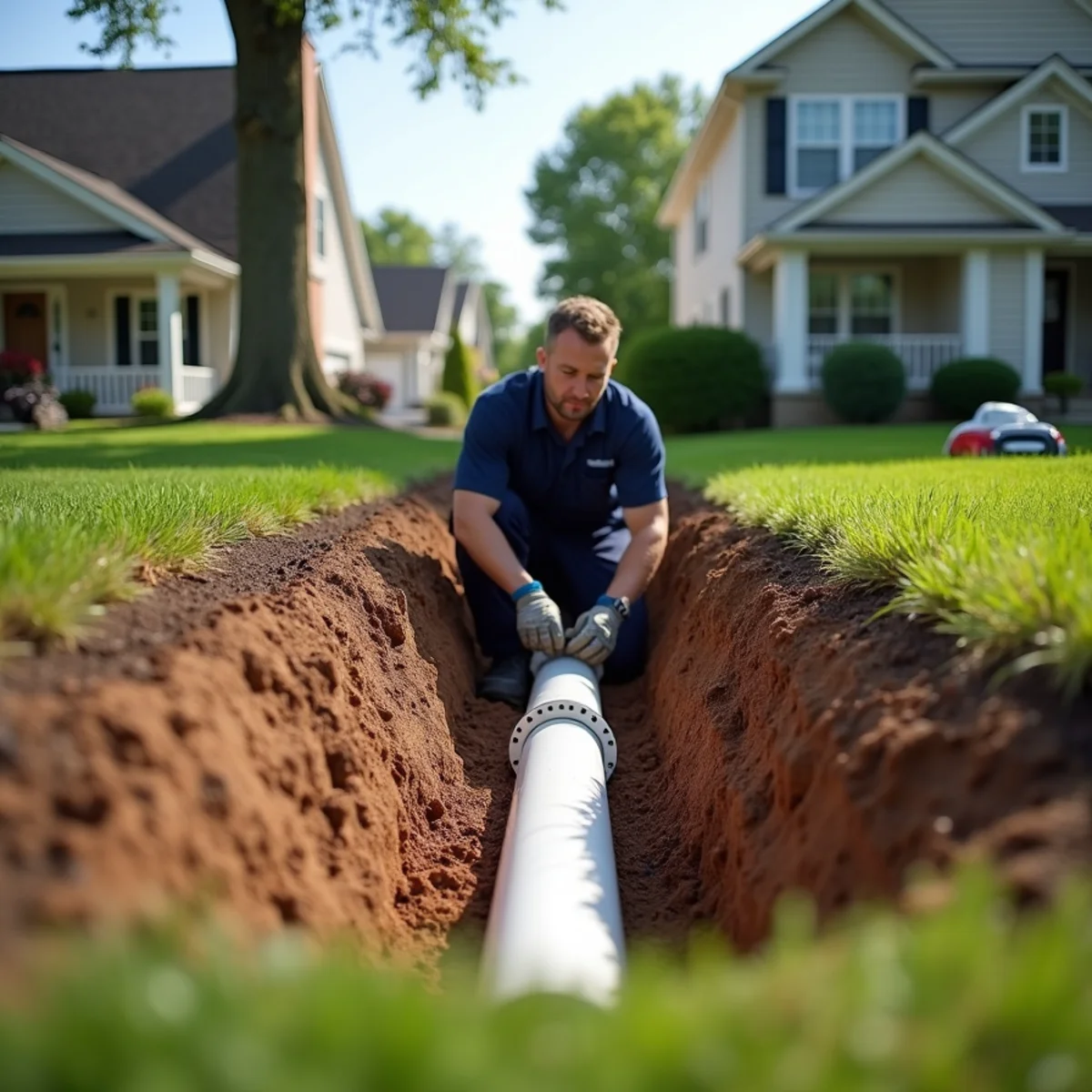
Artisan Water Group
Your main sewer line is the one pipe in the house where a small problem and a catastrophic one look identical from inside the bathroom. Both start as a slow drain.
Need this handled today? Call and a real person answers — nights, weekends and holidays included. You get the price before we start.
The only way to know which you have is to look. We run a self-leveling camera from the cleanout to the municipal connection and you watch the monitor with us — not a summary afterward, the actual footage. Roots at a joint, a belly holding standing water, a crack, an offset, or twenty years of mineral scale each look completely different, and each calls for a different fix and a very different bill.
That matters because sewer work is the easiest place in plumbing to be sold something you do not need. A line with a root intrusion at one joint does not need to be replaced. A line with a collapsed section will not be saved by cleaning it every spring. We would rather show you the video and let the pipe make the argument.
Sewer problems announce themselves in ways single-fixture clogs never do.
Cleared in October, backed up again in February, cleared again in June. A line that needs clearing on a schedule has something structural going on inside it.
Toilets, tubs and the basement floor drain together. The common point is the main, and that is where the problem is.
A leaking sewer line fertilizes and irrigates the grass above it, and the soil settles as material washes away. A lush stripe across an otherwise ordinary lawn is a real clue.
Odor outdoors usually means the line is leaking underground. Indoors it can be a dry trap or a blocked vent — worth diagnosing either way.
Air displaced by a partial blockage escaping through the nearest trap. It is an early warning, and it is worth acting on before it turns into a backup.
Silver maples, willows and older parkway trees send roots toward any joint with moisture. In neighborhoods planted in the 1970s and 80s, those trees are now big enough to matter.
Look first, quote second. Every time.
A camera cannot read a line full of standing water and debris. We cable or jet first so the inspection shows the pipe, not the blockage.
From the cleanout to the municipal tap, recording the whole way. We note pipe material, joint condition, root locations, bellies and any breaks.
A transmitting sonde in the camera head lets us pinpoint a problem on the surface and mark the depth. That turns 'somewhere in the front yard' into a spot and a number.
You see the same screen we see, and you get a copy. If the answer is that your line is in good shape and just needed a cleaning, that is a good day and we will say so.
Roots at one joint: cut, then jet, then a spot repair or liner. A belly: excavate and re-slope that section. A collapse: replacement, trenchless where the run and the soil allow.
Sewer work requires a Village permit and we pull it. When the repair is done, we re-camera the line so you have documented proof of what you bought.
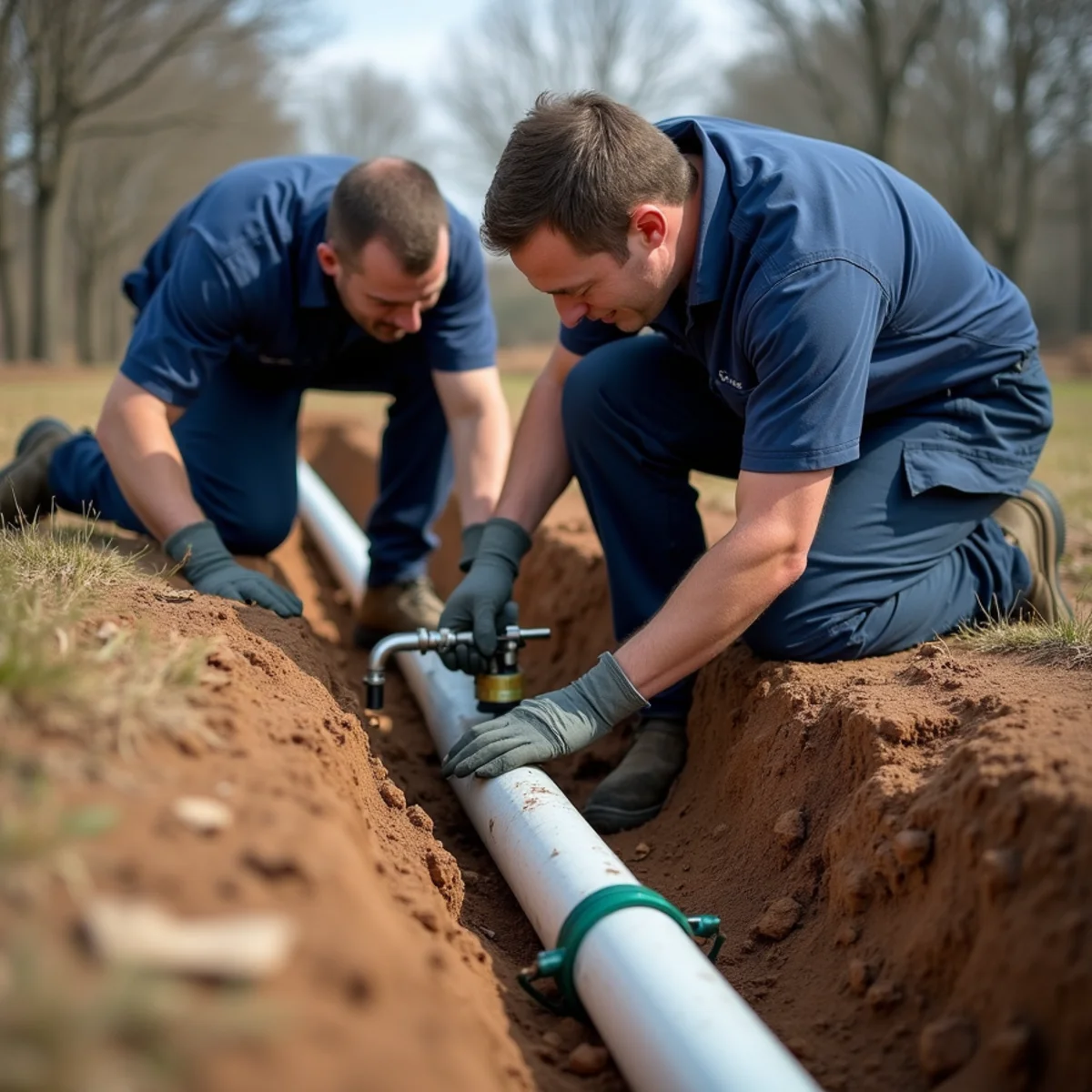
Sewer work is the easiest place in residential plumbing to be sold something you do not need, because the evidence is buried under your front lawn and the homeowner has no way to check.
So every repair we quote starts with a sewer camera inspection. You watch the monitor with us and you keep a copy of the recording. A line with roots at one joint does not need replacing. A line with a collapsed section will not be saved by cleaning it every spring. The footage settles which one you have in about ten minutes.
If someone has quoted you a sewer replacement without showing you the inside of your pipe, get a second opinion before you sign anything.
McHenry County soil is heavy clay. Clay does not drain, which means it expands when wet and contracts when dry, and that constant movement works on buried pipe joints year after year.
Older sewer laterals in this area were commonly laid as short clay tile sections. Every joint is a potential opening, and once a hairline gap forms, tree roots find the moisture and vapor escaping from it. They enter as fine hairs and thicken into a mat that catches everything flushed past it.
Cutting the roots restores flow but does not close the opening — they come back, usually within a couple of years. Which is why a root diagnosis is a conversation about the joint, not just about the roots. Depending on what the camera shows, that might be a spot repair, a cured-in-place liner over the section, or replacing a run.
On a short, shallow run under lawn, an open cut is frequently the faster, cheaper and better repair — dig it, replace the section, restore the sod, done in a day.
It stops being the obvious answer the moment something valuable sits on top of the pipe: a driveway, a patio, a mature tree, a finished basement slab. That is where trenchless sewer repair earns its higher per-foot cost, because two small access pits beat a trench across the front yard once restoration is counted.
We assess candidacy from the camera footage rather than deciding before we look, and we will tell you plainly when your line is not a trenchless candidate.
This is the widest price range in residential plumbing, and it is entirely driven by what the camera finds.
We do not quote a sewer replacement without camera footage supporting it. If someone has quoted you one without showing you the inside of your pipe, get a second opinion.
It is one of the more affordable diagnostic services we offer, and it is a fixed scope rather than an open-ended one. Given that it can either prevent an unnecessary excavation or catch a failing line before it backs up into a finished basement, it is the best money in the sewer category.
The pattern is repeat backups every year or two, often worse in spring when roots grow fastest, usually in a home with mature trees near the line. A camera confirms it in minutes and shows exactly which joint they are entering through.
Yes, where the line qualifies. It needs a run without severe low spots, a pipe that has not fully collapsed, and room for access pits. We assess candidacy from the camera footage rather than deciding before we look.
Yes. The Village of Lake in the Hills requires permits for sewer line work. We pull the permit, coordinate any required inspection, and itemize the fee separately on your invoice.
Sometimes that is a legitimate strategy — an annual jetting on a structurally sound line with minor root intrusion can be the rational choice. What it cannot do is fix a belly, a crack or a collapse. The camera tells us which category you are in, and we will give you the real math on cleaning-forever versus repairing once.
Often needed together
These come up on the same houses more often than not.
A recorded look inside your lateral, watched on the monitor with you — the only honest basis for a sewer repair quote.
Learn morePipe lining and pipe bursting — a new sewer line through two small access pits instead of a trench across your driveway.
Learn moreBackwater valves, flood control systems and overhead sewer conversions — the permanent answer to a basement that backs up.
Learn moreWorth reading first
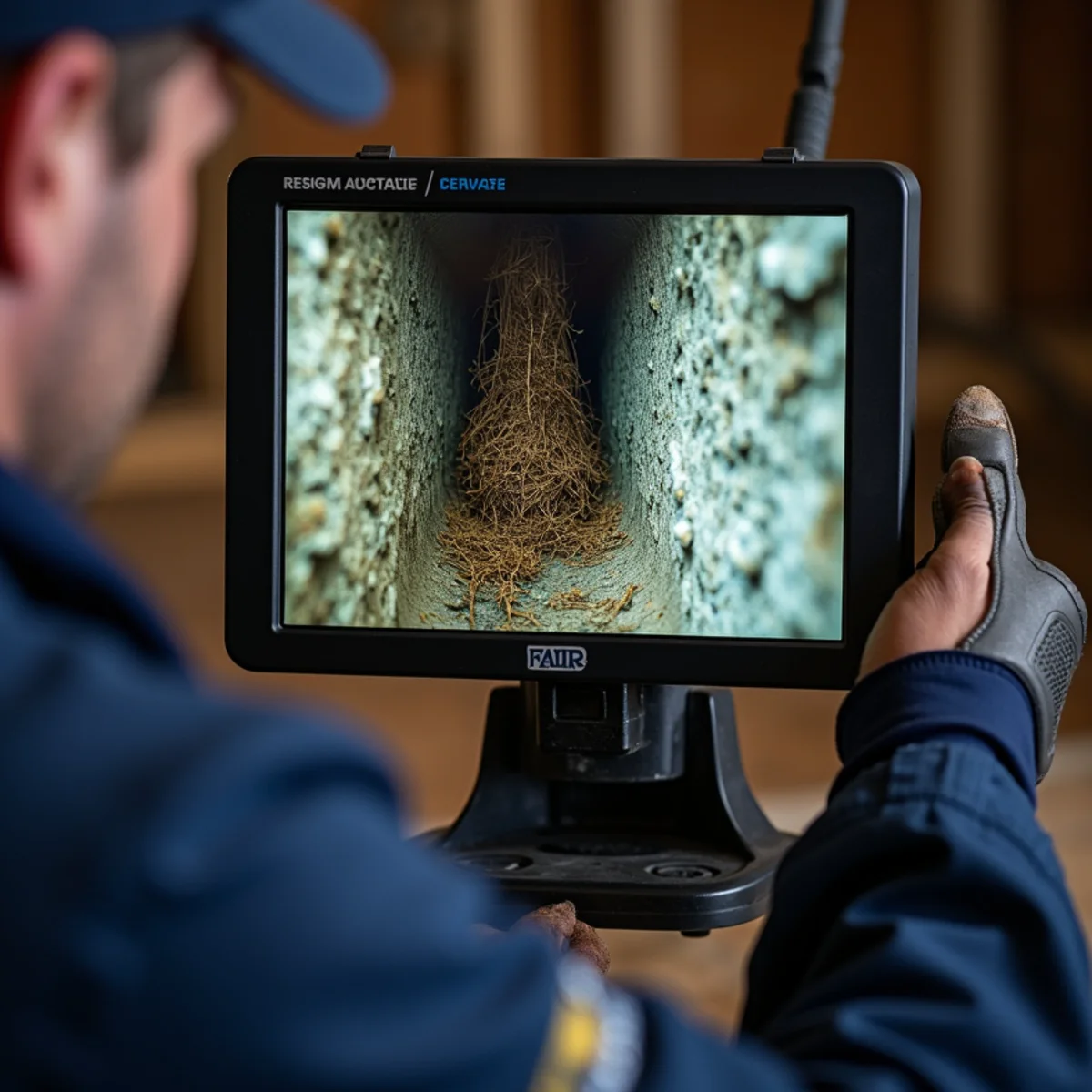
Roots do not attack sound pipe. They find a joint that is already leaking — which is why cutting them out is a treatment, not a cure.

Your home inspector will not look at the one pipe that can cost five figures. Forty minutes with a camera closes that gap.
Sewer Line Repair & Replacement
Call and talk to the person who will do the work. Free written estimates on non-emergency sewer line repair & replacement, and a price before we start on anything urgent.
Tell us what is going on and we will get back to you with a straight answer. No obligation, no pressure.
5.0 from 11 Google reviewsLicensed & insuredFree written estimates
Our online form is not taking submissions just yet.
Please call (207) 419-2600 instead — a real person answers, nights and weekends included, and we can usually sort it faster on the phone anyway.
We are a licensed, insured, owner-operated shop based on Pine Street in Lake in the Hills. That means the person quoting the job is the person doing it, and nobody here is measured on how much they sold you.
Every recommendation starts with the water. At 26–28 grains per gallon, our supply is roughly six times harder than the national average, and it is the single biggest factor in how long anything in your plumbing lasts. Fixing the symptom without addressing that is how you end up calling someone again in two years.
And when a permit is required — water heaters, sewer work, gas piping — we pull it and show the fee on its own line. Ask every plumber you talk to for the same. Read more in our guide to plumbing permits in McHenry County.