Homeowner Guides
Do I Need a Permit for Plumbing Work in McHenry County?
Permits feel like paperwork until you file an insurance claim or sell the house. Here is what actually requires one and why it protects you.
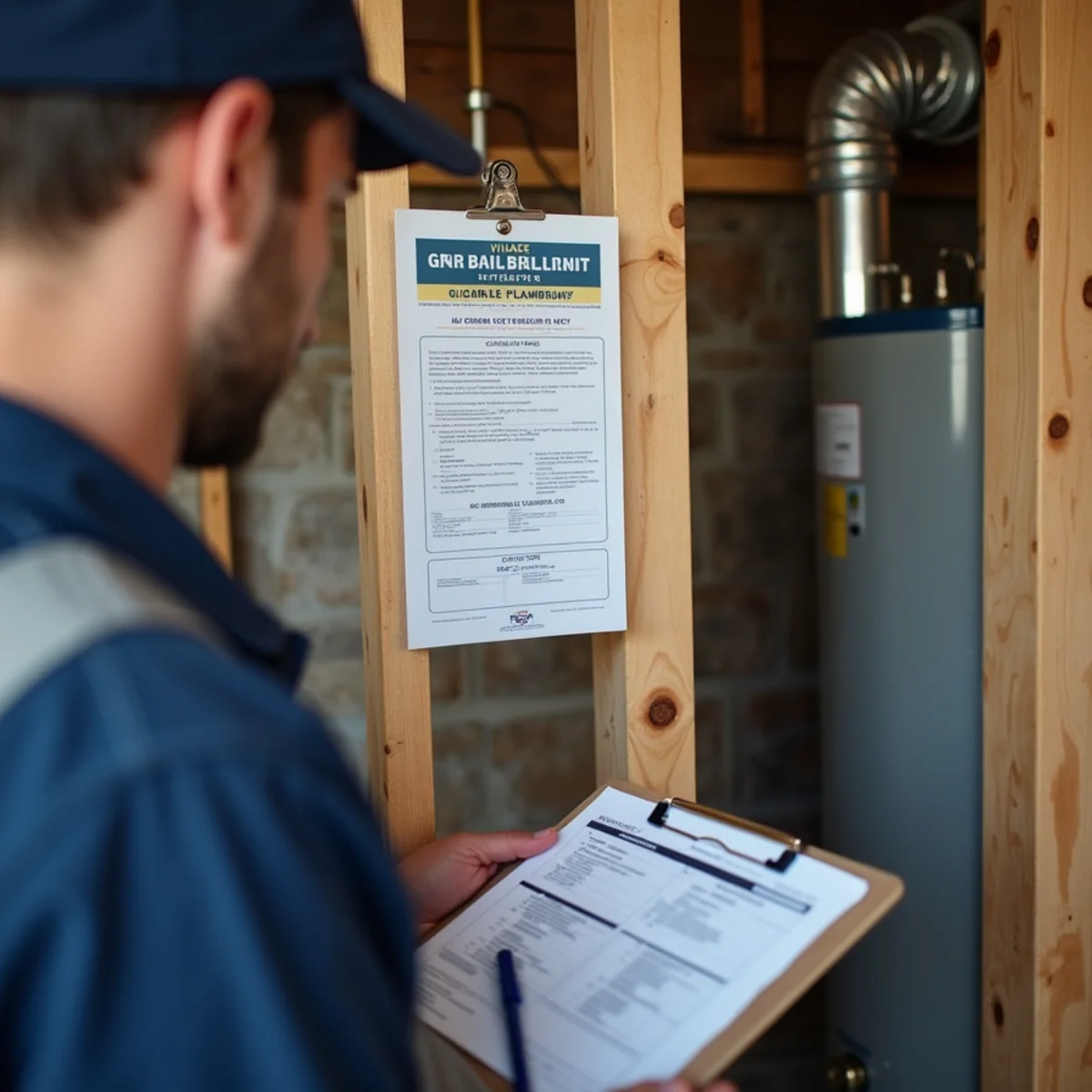
Permits are the part of a plumbing job nobody wants to think about, and the part that costs the most when it was skipped.
Every village in McHenry County sets its own requirements, so specifics vary. But the general shape is consistent, and knowing it lets you ask a contractor the right question before you hire.
Work that typically requires a permit
- Water heater replacement. Yes, even a like-for-like swap. This surprises homeowners more than anything else on the list.
- Sewer line work — repair, replacement, or lining.
- Gas piping of any kind. New runs, extensions to a grill or generator, and modifications.
- New fixture installations where supply and drain lines are added or relocated — a new bathroom, a wet bar, a laundry moved to a different floor.
- Whole-home repiping.
- Water service line replacement between the street and the house.
- Backflow prevention device installation, with annual testing requirements in many jurisdictions.
- Sump pump discharge modifications in some villages, particularly where storm connection rules apply.
Work that typically does not
Straight like-for-like fixture replacement — swapping a faucet, a toilet or a garbage disposal in the same location using existing connections.
Repairs: fixing a leak, replacing a cartridge, clearing a drain, replacing a fixture shutoff valve.
Water softener installation in many jurisdictions, though some do require it, particularly where drain connection rules are strict.
Appliance hookups where the connections already exist.
When we are not certain for your specific village, we call and ask rather than guess. That call takes five minutes and settles it.
Why it actually matters
Insurance is the first reason. If a water heater installed without a permit fails and floods your basement, an adjuster investigating the claim may look at whether the work was permitted and performed by a licensed contractor. Unpermitted work gives an insurer grounds to reduce or deny a water damage claim, and that is a bad conversation to have while your basement is being dried out.
Resale is the second. Unpermitted work turns up during a sale, and buyers' attorneys ask about it. At best it delays closing while it is retroactively permitted and inspected. At worst you are opening walls to prove work that was done years ago meets code.
Safety is the third, and it is not abstract. Gas piping and venting are the two areas where a mistake has consequences measured in something other than dollars. An inspection is a second set of trained eyes on work that is about to be buried behind drywall.
What a permit actually involves
For most residential plumbing, less than homeowners imagine. The contractor submits an application with a scope description and their license information, pays a fee, and receives the permit — often within a day or two for routine work.
The work gets done, then an inspector visits and checks it. For a water heater that means venting, gas connections, the relief valve and discharge, the expansion tank and the general install. It typically takes fifteen minutes.
The permit is closed out and the record exists permanently with the village. That record is what protects you in the insurance and resale conversations above.
It is genuinely not a burden. A contractor who tells you permits are a hassle not worth bothering with is telling you something about how they work, not about permits.
Questions to ask any plumber before hiring
- Does this job require a permit in my village, and will you pull it?
- Will the permit fee appear as its own line on the invoice? It should. Anyone unwilling to itemize it is worth a second look.
- What is your Illinois plumbing license number? State law requires licensed plumbers to display credentials, and you can verify a license through the Illinois Department of Public Health.
- Do you carry general liability and workers' compensation insurance? Ask for a certificate — if an uninsured worker is hurt on your property, that can become your problem.
- Who schedules and meets the inspector? It should be them, not you.
The comparison-shopping angle
Here is the practical reason this matters when you are collecting estimates.
If one quote is meaningfully lower than the others, check whether it includes a permit. A contractor skipping the permit and the inspection is not doing the same job for less money — they are doing a different, smaller job, and transferring the risk to you.
So ask every bidder to itemize the permit separately. It makes the quotes genuinely comparable, and it tells you a great deal about who you are dealing with.
On our side, we pull the permit on every job that requires one across Lake in the Hills, Algonquin, Huntley and the rest of our service area, and it shows on the invoice as its own line. Whether the job is a water heater replacement, sewer work or a gas line, that does not change.
Quick answers
Do I need a permit to replace a water heater in Lake in the Hills?
Yes. Water heater replacement requires a Village permit, even for a like-for-like swap. We pull it as part of the job and itemize the fee separately on the invoice.
What happens if plumbing work was done without a permit?
It can complicate an insurance claim if that system later causes damage, and it typically surfaces during a home sale, where it may need to be retroactively permitted and inspected before closing.
How do I verify a plumber's Illinois license?
The Illinois Department of Public Health maintains a public license lookup for plumbers. Ask for the license number before work begins — state law requires licensed plumbers to display their credentials.
Need a hand with this?
Talk to the plumber who wrote this
We are a licensed, owner-operated shop on Pine Street in Lake in the Hills. Free written estimates on non-emergency work, and a real person answering the phone when it cannot wait.
- 5.0 from 11 Google reviews
- Licensed & insured
- 24/7 emergency service