Water Softener Installation & Repair
Whole-home softeners sized for real 26–28 grain water — plus repairs, resin service and salt guidance for the system you already own.
Learn more
Artisan Water Group
A softener solves what hard water does to your plumbing. It does not do much for what comes out of the drinking glass — taste, chlorine, dissolved solids, and the mineral haze in your ice cubes.
Need this handled today? Call and a real person answers — nights, weekends and holidays included. You get the price before we start.
That is what filtration is for, and the two systems do genuinely different jobs. We install and service both, and we will tell you honestly which one your house actually needs. Sometimes the answer is only one of them.
The most common setup in Lake in the Hills homes is a whole-home softener for the plumbing plus a compact reverse osmosis unit under the kitchen sink for drinking, cooking and ice. That combination costs less than most people expect and covers every complaint we hear.
Filtration solves a specific set of problems. If you recognize these, it is worth doing.
Dissolved minerals cloud ice and carry flavor. Clear, neutral ice is one of the most immediately noticeable changes after an RO install.
Municipal disinfection is doing its job, but the residual is easy to remove at the point of use with carbon and unpleasant to drink if you are sensitive to it.
High dissolved solids flatten flavor and leave scale in the carafe. Anyone serious about coffee notices RO water immediately.
If a case a week is a line item in your grocery budget, an under-sink RO unit pays for itself faster than almost any plumbing upgrade we install.
Small appliances that boil or evaporate water concentrate minerals fast. RO water eliminates the descaling routine entirely.
Aquariums, espresso machines, infant formula, or a household member on a restricted diet. Each has a different ideal setup and we size accordingly.
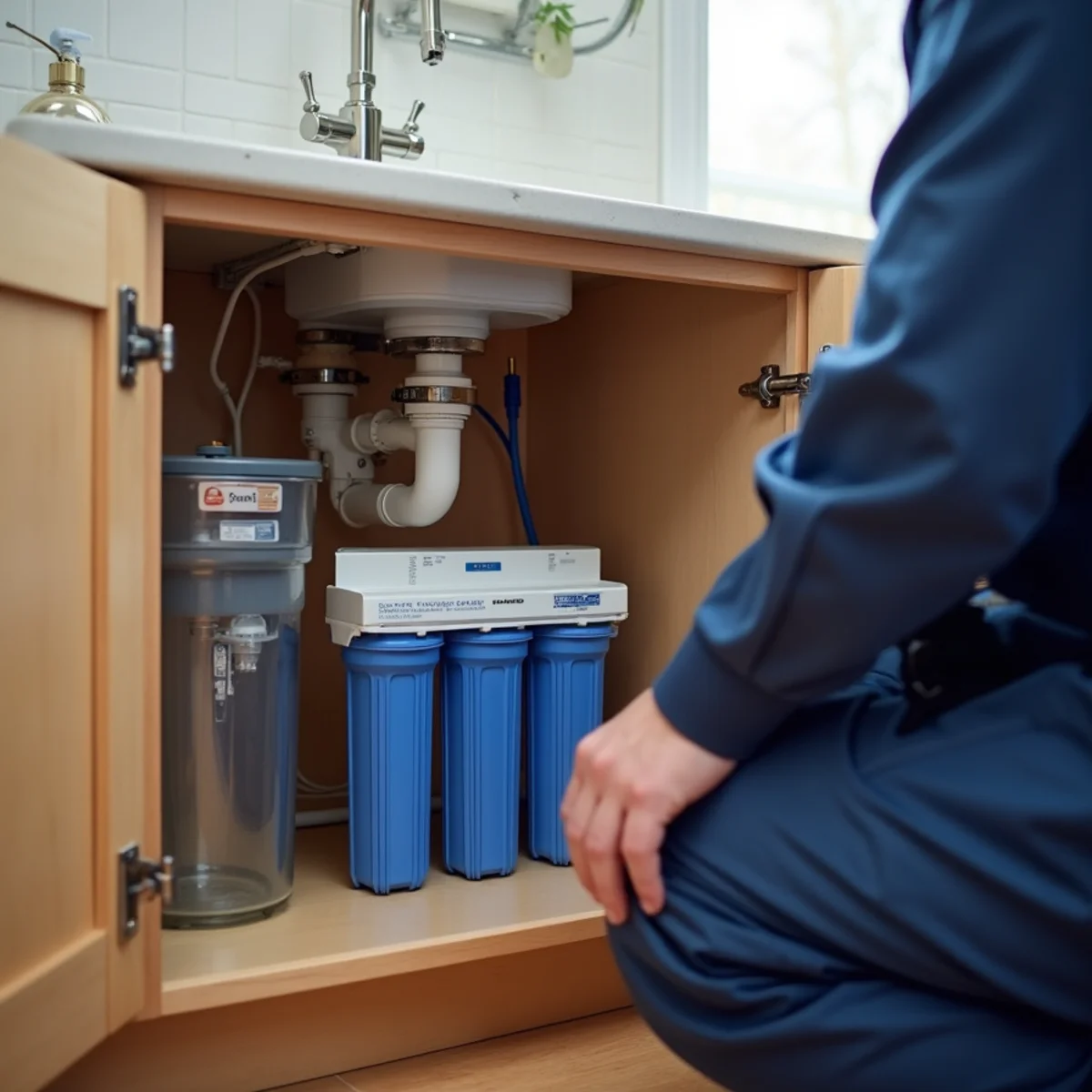
Under-sink RO is usually a single-visit job. Whole-home filtration takes a little more planning.
Taste, odor, scale in appliances, or a specific contaminant concern. Chasing the wrong one means buying the wrong system, and there is no point filtering something that is not there.
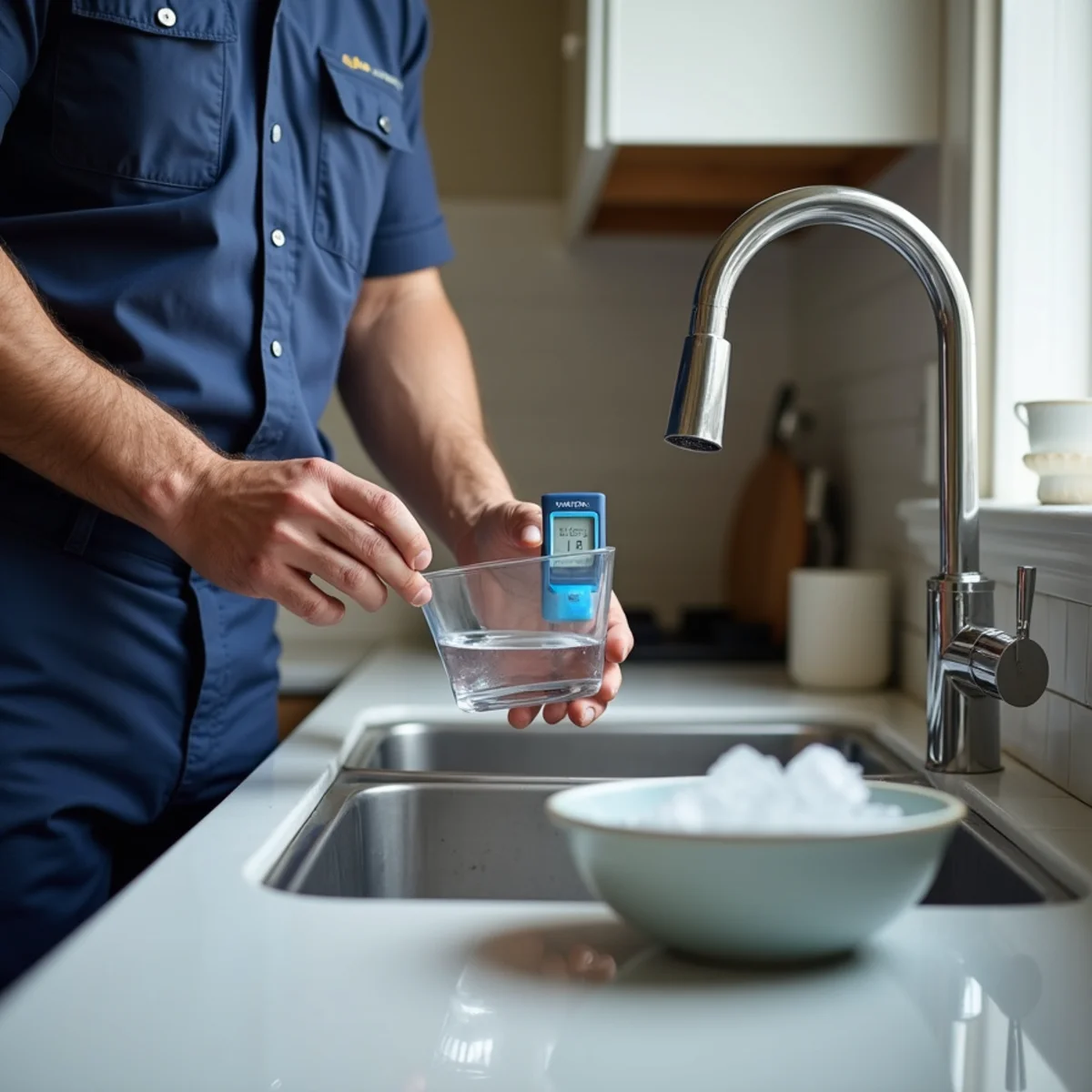
We test at the tap and, for municipal supply, walk you through the Village's published water quality report. Together those tell us whether carbon is enough or whether RO is the right answer.
RO is point-of-use — you do not want to run the whole house through a membrane. Carbon filtration can be whole-home and is the right tool for chlorine taste and odor throughout.
RO unit mounts inside the sink base with a dedicated faucet at the deck, a drain saddle or air-gap fitting to the tailpiece, and a line run to the refrigerator ice maker if you want it.
New membranes need flushing before the water is worth drinking. We flush, then test total dissolved solids at the new faucet and show you the before-and-after reading.
Pre and post filters are typically annual; the membrane runs several years. We label the unit with dates so nobody is guessing in two years.
A softener removes hardness minerals through ion exchange. Its job is protecting pipes, water heaters, dishwashers and washing machines. It is not a purifier, and it is not primarily about taste.
A filter removes things you can taste, smell, or want out of your drinking water — chlorine, sediment, dissolved solids, and specific contaminants depending on the media. It does nothing for scale in your water heater.
They solve different problems, which is why most well-set-up Lake in the Hills homes have both. If you can only do one right now, do the softener — it protects thousands of dollars of equipment. Then add RO at the kitchen sink when the budget allows. Our water softener sizing and installation page covers that side in depth.
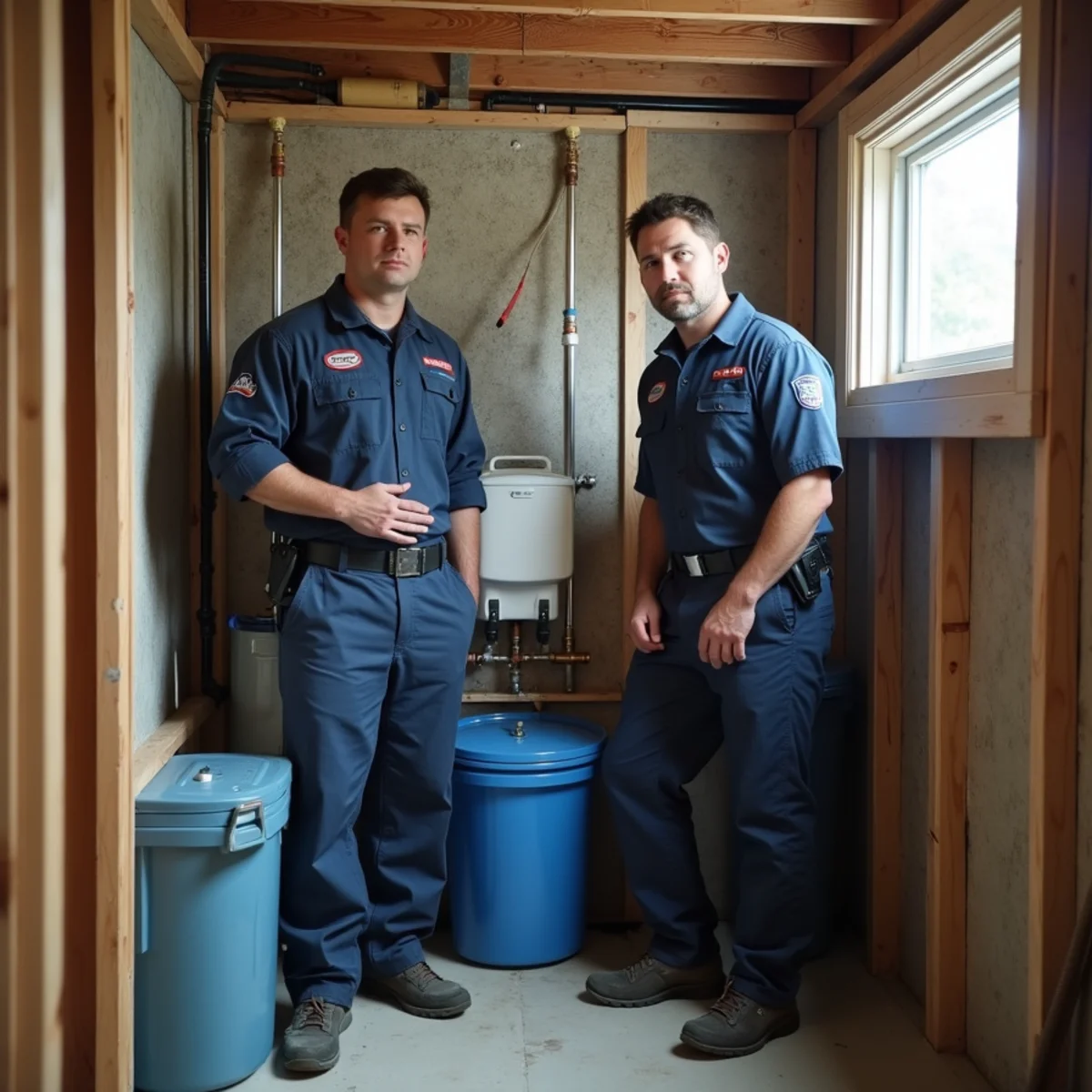
Homes outside village limits — parts of Bull Valley, Prairie Grove, rural Woodstock and Marengo — are on private wells, and the treatment conversation changes completely.
Well water here commonly carries iron, which stains fixtures orange and fouls softener resin if it is not addressed first. Some wells carry sulfur, which produces the rotten-egg smell people mistake for a gas leak. Both need dedicated treatment ahead of any softener, in the right order, or you will replace resin far too often.
We test private wells for hardness, iron, pH and total dissolved solids before recommending anything. Municipal advice does not transfer to well water, and applying it is how homeowners end up with an expensive system that does not fix the actual complaint.
Filtration is one of the more affordable improvements we do — but the range is wide because the systems are different.
Filter replacements are inexpensive and we will happily show you how to do them yourself. We would rather you keep the system working than sell you a service plan you do not need.
At the tap it does — RO water is essentially free of hardness minerals. But it only treats what passes through the unit, which is your drinking faucet and maybe the ice maker. It does nothing for the water heater or the washing machine, so it does not replace a softener.
Yes. The Village publishes annual water quality reports and the supply meets EPA standards. Filtration here is about taste, chlorine odor and dissolved minerals — comfort and appliance protection, not safety.
Older units sent several gallons to drain per gallon produced. Modern high-efficiency membranes and permeate pumps have improved that dramatically. We install efficient units and can add a permeate pump where it makes sense.
Sediment and carbon pre-filters roughly annually, the post-filter annually, and the membrane every three to five years depending on feed water. On softened water the membrane lasts noticeably longer.
Yes, and it is one of the most popular add-ons we do. It gives you filtered water and clear, clean-tasting ice from the door instead of the cloudy cubes hard water produces.
Often needed together
These come up on the same houses more often than not.
Whole-home softeners sized for real 26–28 grain water — plus repairs, resin service and salt guidance for the system you already own.
Learn moreKitchen, bath and utility faucets — repaired or replaced with the ceramic-disc, solid-brass parts that survive 26–28 grain water.
Learn moreCopper and PEX repipes for galvanized and failing systems — planned in phases so your water is back on every night.
Learn moreWorth reading first
One protects your plumbing. The other improves what you drink. Confusing them is the most expensive mistake in home water treatment.
Short answer: yes, and it is not close. At 26 to 28 grains per gallon, our water is roughly six times harder than the national average. Here is what that actually does to your house.
Water Filtration & Reverse Osmosis
Call and talk to the person who will do the work. Free written estimates on non-emergency water filtration & reverse osmosis, and a price before we start on anything urgent.
Tell us what is going on and we will get back to you with a straight answer. No obligation, no pressure.
5.0 from 11 Google reviewsLicensed & insuredFree written estimates
Our online form is not taking submissions just yet.
Please call (207) 419-2600 instead — a real person answers, nights and weekends included, and we can usually sort it faster on the phone anyway.
We are a licensed, insured, owner-operated shop based on Pine Street in Lake in the Hills. That means the person quoting the job is the person doing it, and nobody here is measured on how much they sold you.
Every recommendation starts with the water. At 26–28 grains per gallon, our supply is roughly six times harder than the national average, and it is the single biggest factor in how long anything in your plumbing lasts. Fixing the symptom without addressing that is how you end up calling someone again in two years.
And when a permit is required — water heaters, sewer work, gas piping — we pull it and show the fee on its own line. Ask every plumber you talk to for the same. Read more in our guide to plumbing permits in McHenry County.