24/7 Emergency Plumbing
A real person answers, a licensed plumber rolls, and you get the price before any work starts — nights, weekends and holidays included.
Learn more
Artisan Water Group
Ask anyone in Lake in the Hills who has finished a basement what keeps them up at night in April, and they will say the same thing: the sump pump.
Need this handled today? Call and a real person answers — nights, weekends and holidays included. You get the price before we start.
The setup here is unforgiving. Clay-heavy soil sheds water instead of absorbing it. Frozen ground in March means snowmelt has nowhere to go but sideways and down along foundations. Then a spring storm stacks two inches of rain on top of a saturated water table, and every pit in the subdivision runs continuously for days. That is exactly when a pump that was already tired quits — and exactly when the power tends to go out.
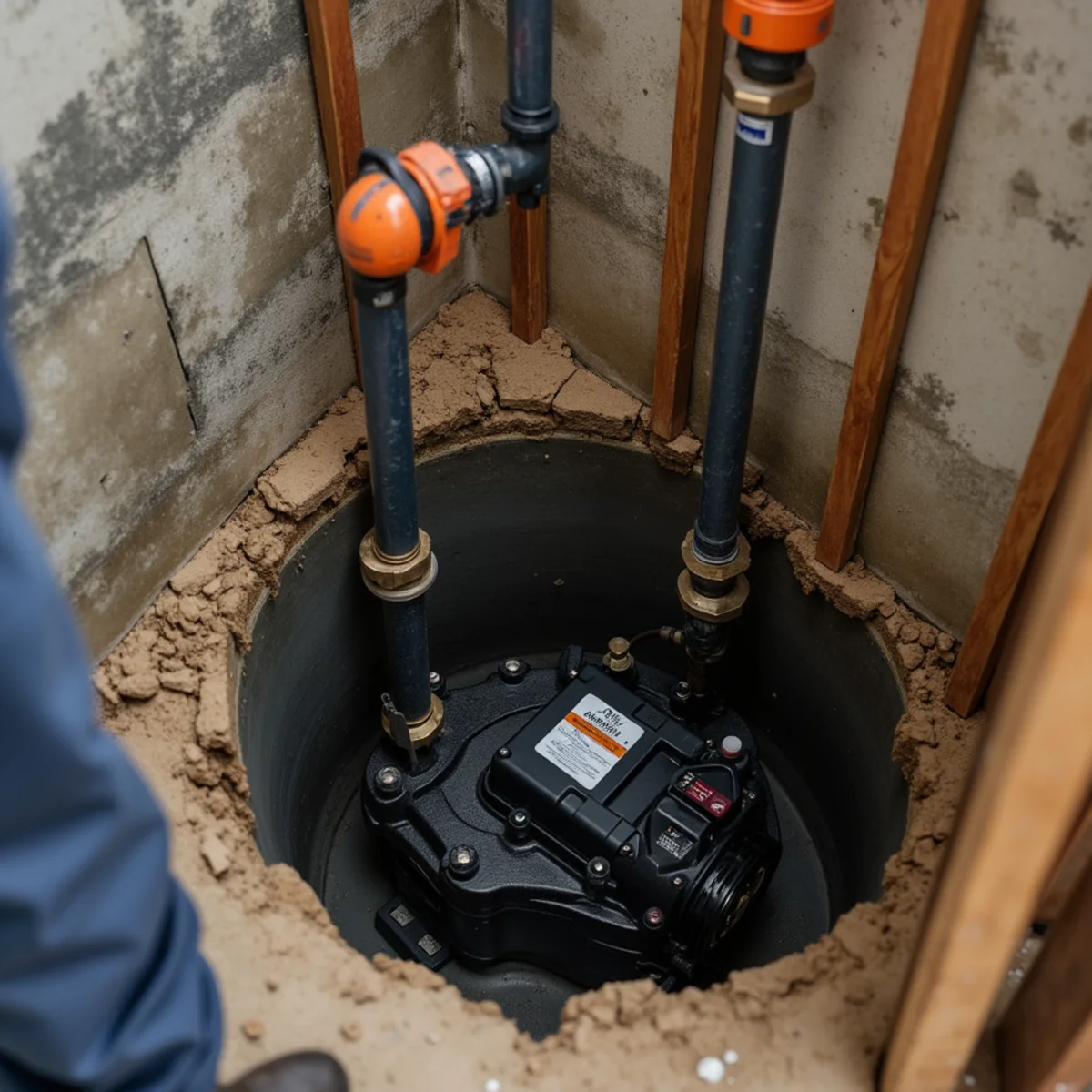
We install, replace and maintain primary sump pumps, battery backup systems, and the flood sensors that tell you something is wrong while you are still at work. We also service ejector pumps, which handle waste from below-grade bathrooms and fail in their own particular ways.
A sump pump that is about to fail almost always tells you first. Most people just do not know what they are listening for.
Usually a stuck float, a failed check valve letting discharged water run back into the pit, or groundwater genuinely high enough to need a second look at your drainage.
Worn bearings or a jammed impeller. A pump that hums without moving water has seconds of useful life left, and it will spend them the night you need it.
Short-cycling means the pit is too small, the float is set wrong, or the check valve is bad. Every cycle is wear, and short-cycling ages a pump fast.
Iron bacteria — common in McHenry County groundwater. It coats the float and impeller, and it is the leading cause of pumps that look fine and do nothing.
Primary pumps last roughly seven to ten years here. If you do not know how old yours is, assume it is due and test it.
This is the big one. A finished basement protected by a single pump on household power is one storm outage away from a five-figure loss.
We look at the whole water path, not just the pump sitting in the hole.
Pit depth and diameter, how fast it fills, condition of the drain tile inlets, and how much sediment has collected. A pit full of gravel and silt shortens any pump's life.
We measure how quickly the pit refills during heavy inflow and size the pump in gallons per hour against the head height of your discharge, not by horsepower alone.
A discharge that dumps three feet from the foundation is recirculating the same water. It needs to carry water well away, with a freeze-resistant path and a properly working check valve.
Union fittings so the pump can be pulled without cutting pipe, a check valve at the right height, a solid pit lid to control humidity and radon, and the float set with room to swing freely.
Battery backup for most homes. For a finished basement with high inflow, a second pump on a separate circuit. We size the battery for realistic outage duration, not a best-case number.
We fill the pit and run it, verify the backup takes over with primary power cut, and set up the WiFi flood sensor so your phone tells you before your carpet does.
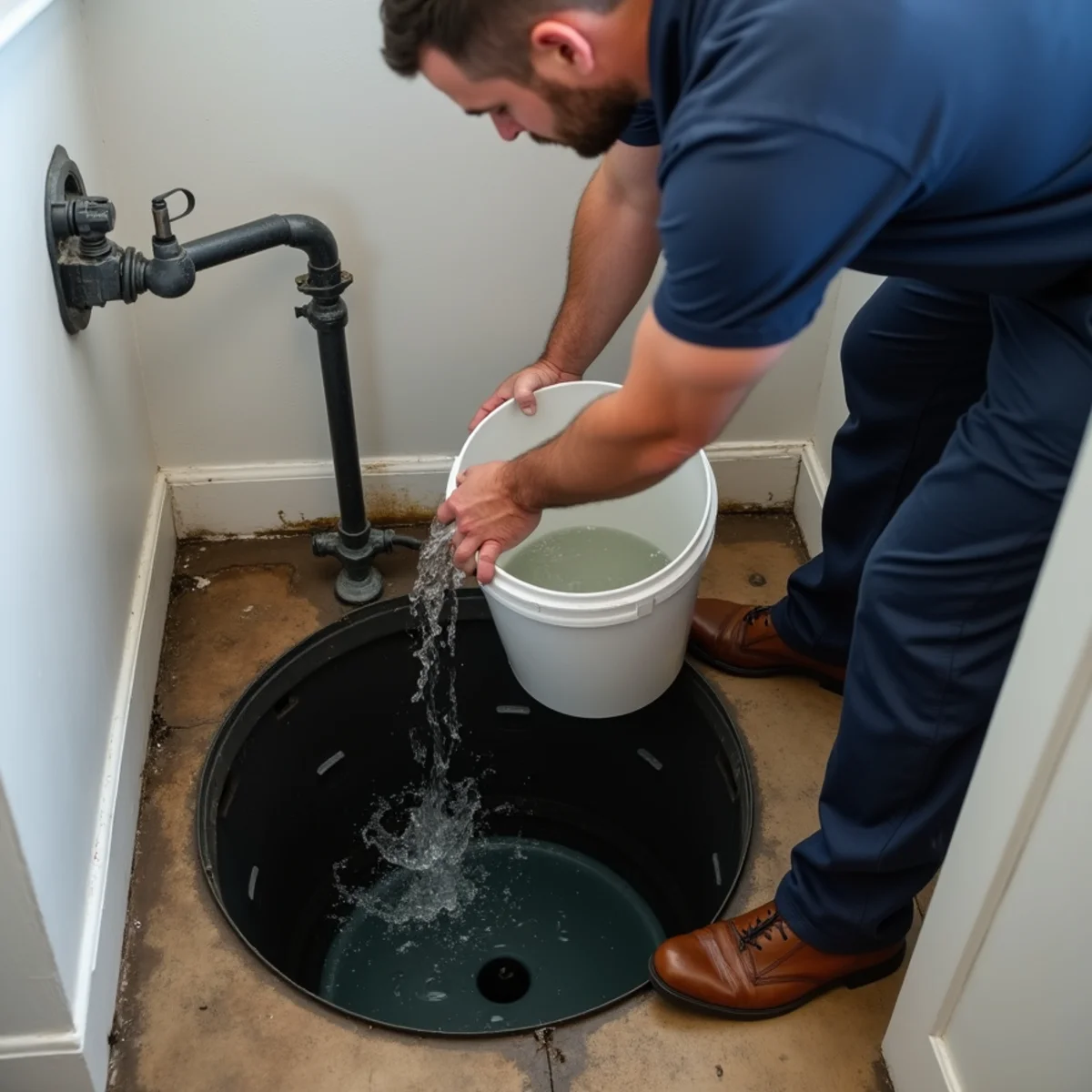
Twice a year, pour five gallons of water into the pit and watch. The pump should kick on within about ten seconds, move the water briskly, and shut off cleanly without cycling back on.
If it hesitates, sounds labored, hums before it starts, or fires and immediately restarts, call before spring. A pump that struggles on five gallons of test water will not survive four days of continuous snowmelt.
While you are down there, look at the float. It has to swing without touching the pit wall or the discharge pipe. Then check the discharge outside — if it is buried under mulch, frozen, or aimed at the foundation, fix it now. And if you have a battery backup, unplug the primary and confirm the backup actually takes over. A backup nobody has tested is a decoration.
Snowmelt in McHenry County does not soak in. The top of the soil profile thaws while a foot below stays frozen, so meltwater runs along that frozen layer straight to the lowest point it can find — which is usually the drain tile around your foundation.
The clay in this area makes it worse. Clay holds water rather than draining it, so the ground around the house stays saturated for days after a melt. Every pit in the neighborhood is working hard at the same time.
Then a spring storm parks over the area. That is the classic April failure: a pump that has already run for seventy-two hours straight, a saturated water table, and often a power flicker from the same storm system. It is not an unlucky night. It is a predictable annual event, and a backup system is how you plan for it.
If you have a bathroom, laundry sink or bar sink below the level of your main sewer line, there is a second basin in your basement with a sealed lid. That is an ejector pit, and it handles waste, not groundwater.
Ejector pumps fail differently. They clog on wipes and hygiene products that a sump pump would never see, the check valve fouls, and the sealed lid's vent gets blocked — which produces sewer odor in the basement long before the pump actually quits.
We service both. If you have noticed a smell near the basement bathroom or a gurgle when the laundry drains, have the ejector looked at. That system failing is considerably worse than a sump failing.
A straight pump swap is one of the more predictable jobs we do. The variables show up around it.
Free estimates on any non-emergency sump work. If yours only needs a cleaning and a new check valve, that is what we will quote.
Primary pumps generally last seven to ten years in this area, less if they run heavily every spring or if iron bacteria is present. Test twice a year and plan on replacement rather than waiting for the failure — they almost always fail during a storm.
If your basement is finished or stores anything you would not want to lose, yes. Spring storms in McHenry County knock out power exactly when the pump is working hardest. A backup is a small fraction of what water damage restoration costs.
It depends on how hard the pump has to work. A good deep-cycle battery typically gives several hours of heavy intermittent pumping or considerably longer with light use. We size the battery to your pit's actual inflow rather than quoting a catalog number.
Most often a failed check valve, which lets discharged water flow right back into the pit so the pump keeps re-pumping the same gallons. Other causes are a stuck float or a genuinely high water table. All three are worth diagnosing — the pump is wearing out either way.
Yes. It means cutting the basement floor, excavating for a basin, setting the pit, tying in drain tile where present, and running a discharge line to daylight. It is a bigger job than a swap, but for a chronically damp basement it is often the only real fix.
Often needed together
These come up on the same houses more often than not.
A real person answers, a licensed plumber rolls, and you get the price before any work starts — nights, weekends and holidays included.
Learn moreSpot repairs, section replacement and full laterals — quoted from camera footage you watch with us, never from a guess.
Learn moreFind the hidden leak before you open the wall — acoustic, thermal and pressure diagnostics, then a proper repair.
Learn moreWorth reading first
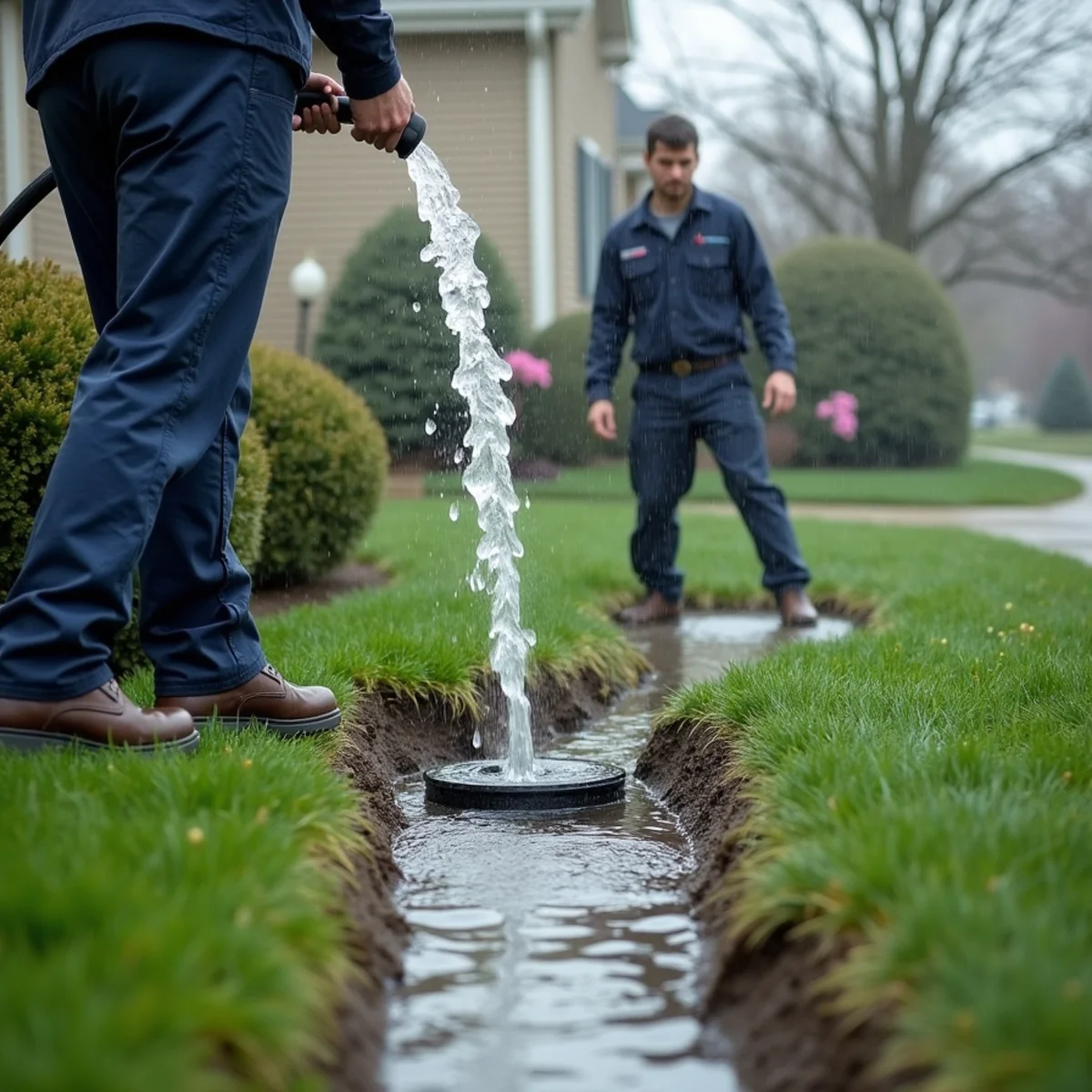
It is not bad luck and it is not one unusually big storm. Basement flooding here follows a predictable annual pattern, which means it can be planned for.
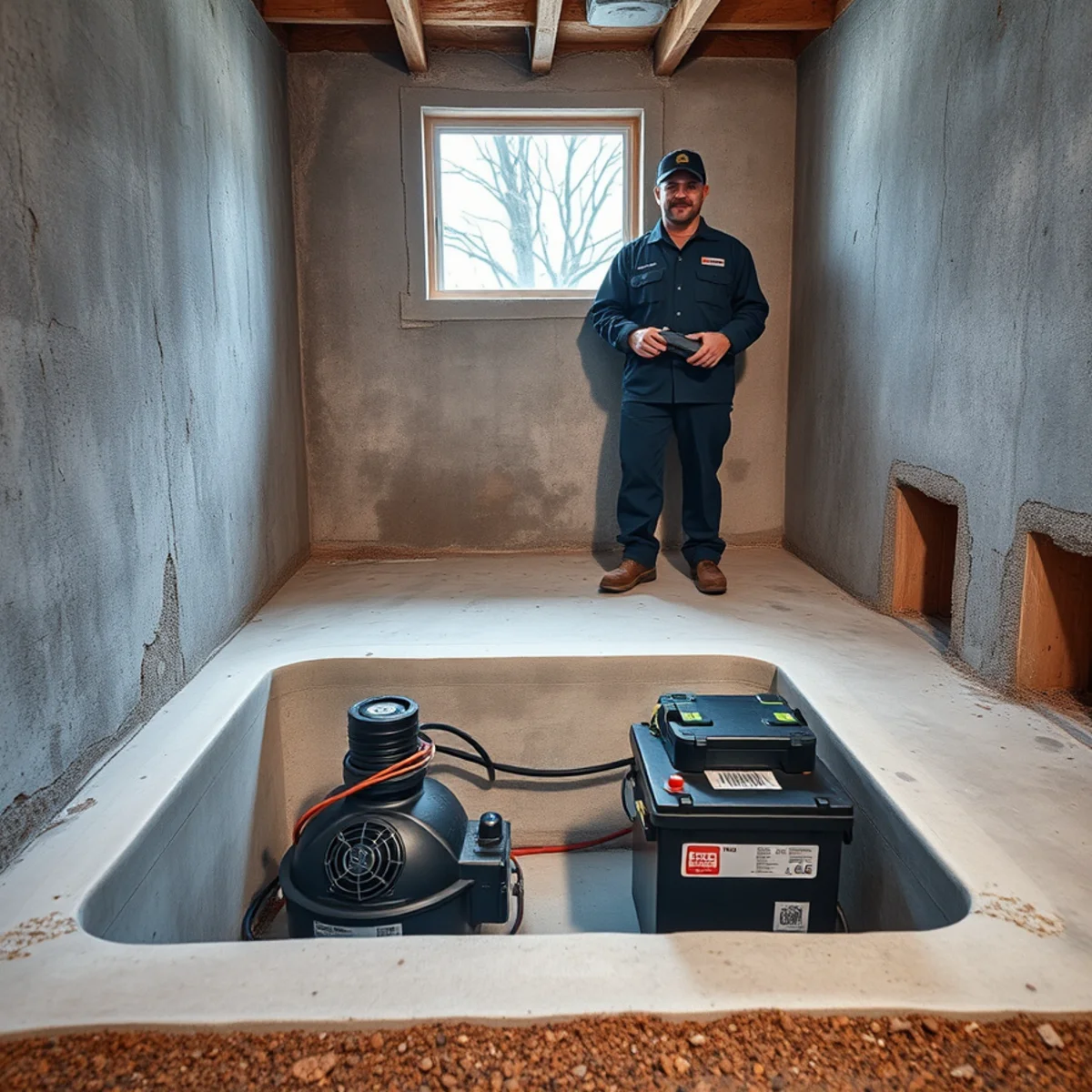
The failure mode is almost comically predictable: the pit fills fastest at the exact moment the power goes out. A backup is how you stop being surprised by it.
Sump Pump Installation & Battery Backup
Call and talk to the person who will do the work. Free written estimates on non-emergency sump pump installation & battery backup, and a price before we start on anything urgent.
Tell us what is going on and we will get back to you with a straight answer. No obligation, no pressure.
5.0 from 11 Google reviewsLicensed & insuredFree written estimates
Our online form is not taking submissions just yet.
Please call (207) 419-2600 instead — a real person answers, nights and weekends included, and we can usually sort it faster on the phone anyway.
We are a licensed, insured, owner-operated shop based on Pine Street in Lake in the Hills. That means the person quoting the job is the person doing it, and nobody here is measured on how much they sold you.
Every recommendation starts with the water. At 26–28 grains per gallon, our supply is roughly six times harder than the national average, and it is the single biggest factor in how long anything in your plumbing lasts. Fixing the symptom without addressing that is how you end up calling someone again in two years.
And when a permit is required — water heaters, sewer work, gas piping — we pull it and show the fee on its own line. Ask every plumber you talk to for the same. Read more in our guide to plumbing permits in McHenry County.