Water Heaters
Tank vs. Tankless Water Heaters: Which Is Right for Your Illinois Home?
Tankless is excellent in the right house and a headache in the wrong one. Here is how to tell which you have, with the northern Illinois specifics.
Most tank-versus-tankless articles are written for a generic climate with generic water. Northern Illinois has neither, and the two local factors — genuinely cold groundwater in February and genuinely hard water year-round — change the answer.
So here is the comparison with those factors included.
How each one works
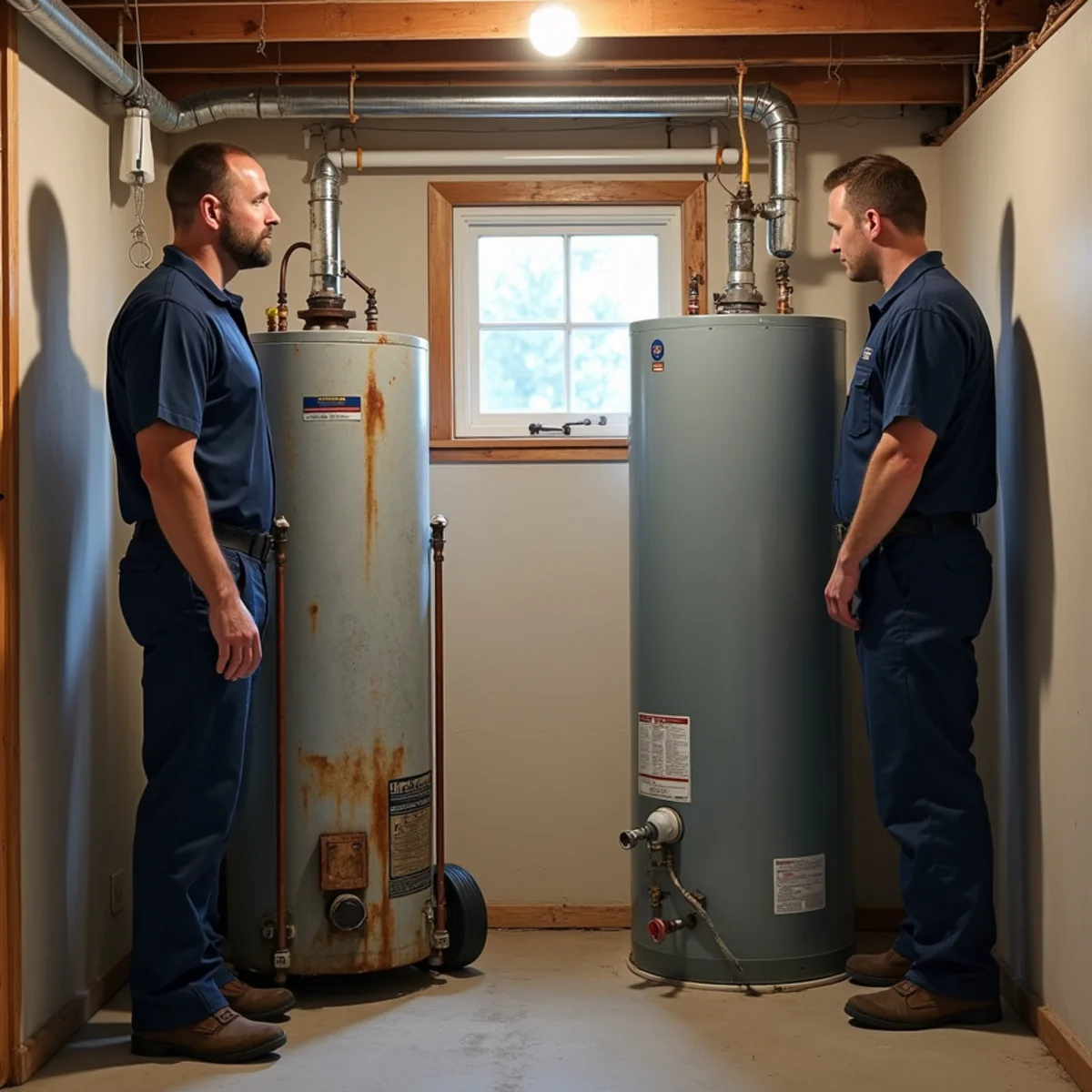
A tank heater keeps forty to seventy-five gallons hot around the clock. When you open a tap, hot water leaves the top and cold water enters the bottom. When the temperature drops, the burner or elements fire.
A tankless unit heats water only as it flows through a compact heat exchanger. Open a tap, the unit senses flow, fires, and heats the water on its way past. Close the tap, it shuts off. There is no stored volume and no standby loss.
The cold groundwater factor
Tankless capacity is measured in gallons per minute at a given temperature rise. That second part is where northern Illinois matters.
In July, incoming groundwater might be around 60°F. To reach a comfortable 120°F you need a 60-degree rise. In February that same incoming water can be in the 40s, which means a rise closer to 75 or 80 degrees — and a tankless unit's usable flow rate drops as the required rise increases.
The practical consequence: a unit sized on a summer number will disappoint in winter, which is exactly when a lukewarm shower is least welcome. We size for a February morning, not for a brochure's best case.
The hard water factor
This is the deal-breaker in Lake in the Hills and every deep-well town around it.
A tankless heat exchanger uses narrow passages — that is what makes it efficient. Those same narrow passages are exactly where mineral scale causes problems, and at 26 to 28 grains per gallon, scale finds them fast. Flow drops, the burner short-cycles, and error codes start appearing.
The manufacturer's advice to descale annually assumes 7 to 10 grain water. On raw Lake in the Hills water you are looking at every six months at best, and even then you are fighting chemistry rather than managing it.
So the rule is simple: a tankless unit here needs treated water. Whole-home softening is the best answer because it protects everything else too. Dedicated scale pre-treatment ahead of the unit is the fallback. If treatment is genuinely off the table, stay with a tank — and we will tell you that rather than sell you the more expensive box.
What tankless actually gives you
- Endless hot water. Back-to-back showers, a large soaking tub, a long guest weekend. This is the real reason people love them.
- Roughly twenty years of service life instead of eight to ten from a tank in this water — assuming treatment and descaling.
- Reclaimed floor space. The unit hangs on a wall in about the footprint of a carry-on bag.
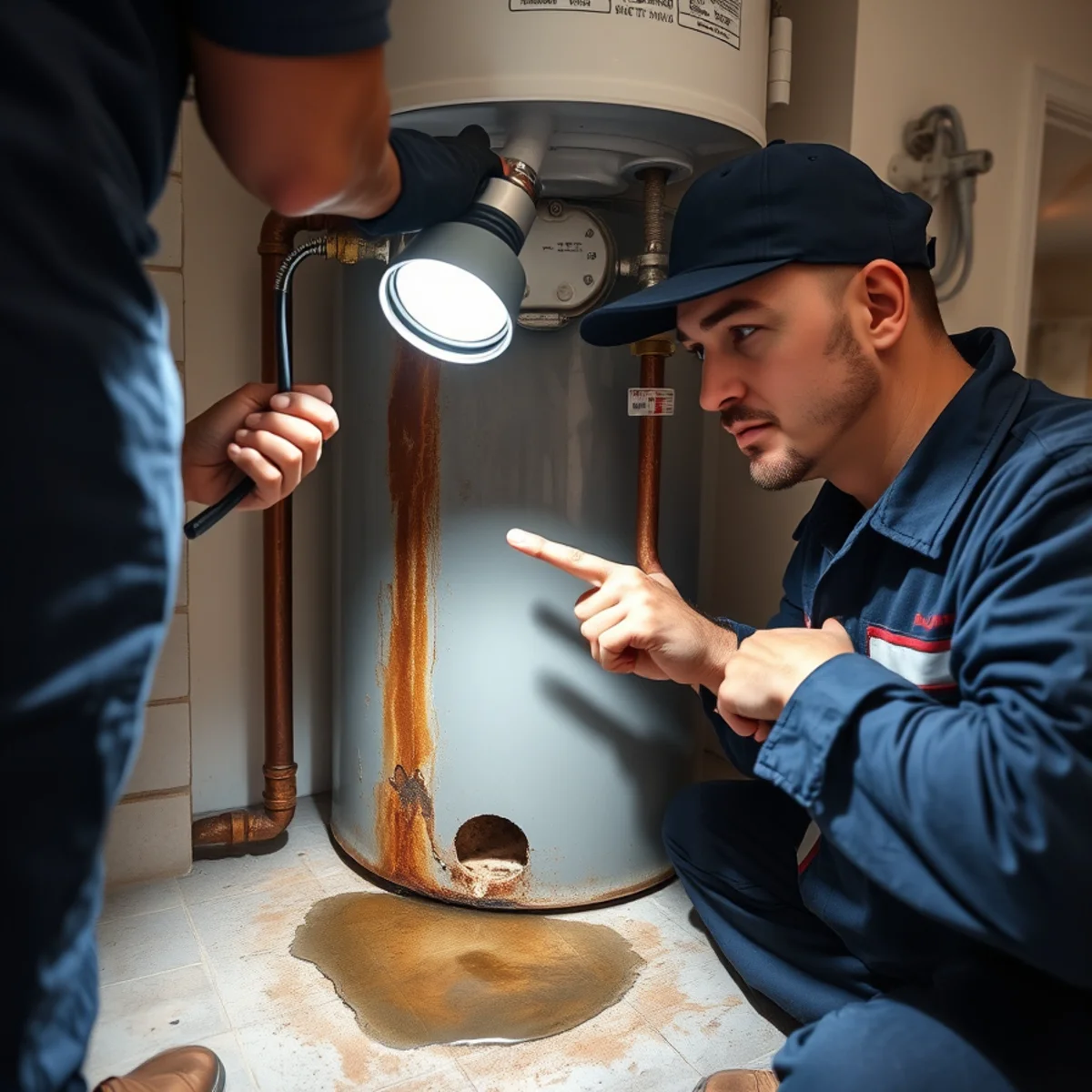
- No stored volume waiting to end up on your basement floor. A tank failure dumps forty to seventy-five gallons; a tankless failure does not.
- Lower standby loss. A tank reheats itself all day whether anyone is home or not. A tankless unit uses gas only when a tap is open.
What tankless does not give you
It does not give you instant hot water at a distant fixture. That is a distribution problem, solved with a recirculation loop, not by the heater. Anyone promising instant hot water from a swap alone is overselling.
It does not lower your water bill.
And the energy savings, while real, are usually modest — not enough on their own to justify the install cost. If someone is selling tankless purely on the efficiency math, be skeptical.
The install cost reality
A tank swap is a relatively contained job. A tankless install frequently is not, and the difference is mostly gas and venting.
Tankless units call for 150,000 to 199,000 BTU at full fire. Many homes here were piped for a 40,000 BTU tank plus a furnace, which means the line from the meter often needs upsizing. That can be a short easy pull or a long one through finished space, and it is the single largest cost variable.
Venting is the second. Condensing units vent with PVC to a sidewall or roof; non-condensing units need metal venting. Either way it is new work, not a reuse of the old flue.
Then there is the electrical receptacle for the controls, the condensate drain and neutralizer on condensing models, and the water treatment. Our tankless installation page breaks all of it down, and we quote the whole job in writing before anything is ordered.
So which one should you buy?
Choose tankless if you run out of hot water regularly, you plan to stay in the house ten-plus years, your gas service can support it or you are willing to upsize, and you are treating the water. In that combination it is genuinely excellent.
Choose a tank if you are selling within a few years, your household's hot water demand is comfortably met today, your budget favors a lower install cost, or you are not going to install treatment. A well-maintained tank on softened water reaching twelve to fifteen years is a completely rational choice, and there is nothing second-rate about it.
In Lakewood and South Barrington, where houses are large and hot water demand is high, tankless makes sense more often than not. In a modest ranch in Lake in the Hills, a properly sized tank water heater is usually the better value.
Quick answers
Do tankless water heaters work well in cold climates?
Yes, but they must be sized for winter incoming water temperature. Colder groundwater means a larger temperature rise and lower usable flow, so a unit sized on summer numbers will underperform in February.
Can two showers run at once on a tankless water heater?
With a properly sized unit, yes. The constraint is gallons per minute at the required temperature rise, which is why sizing has to be done for the coldest month rather than the average.
How much does it cost to convert from tank to tankless?
It varies widely, and the biggest variables are whether the gas line needs upsizing and how far the new venting has to run. We quote the complete job — gas, vent, electrical, treatment and permit — in writing before anything is ordered.
Need a hand with this?
Talk to the plumber who wrote this
We are a licensed, owner-operated shop on Pine Street in Lake in the Hills. Free written estimates on non-emergency work, and a real person answering the phone when it cannot wait.
- 5.0 from 11 Google reviews
- Licensed & insured
- 24/7 emergency service