Drains & Sewer
How Clay Soil in McHenry County Damages Sewer Lines
Clay expands when wet and contracts when dry. Do that for sixty years under a jointed pipe and you get the three failures we find most often.
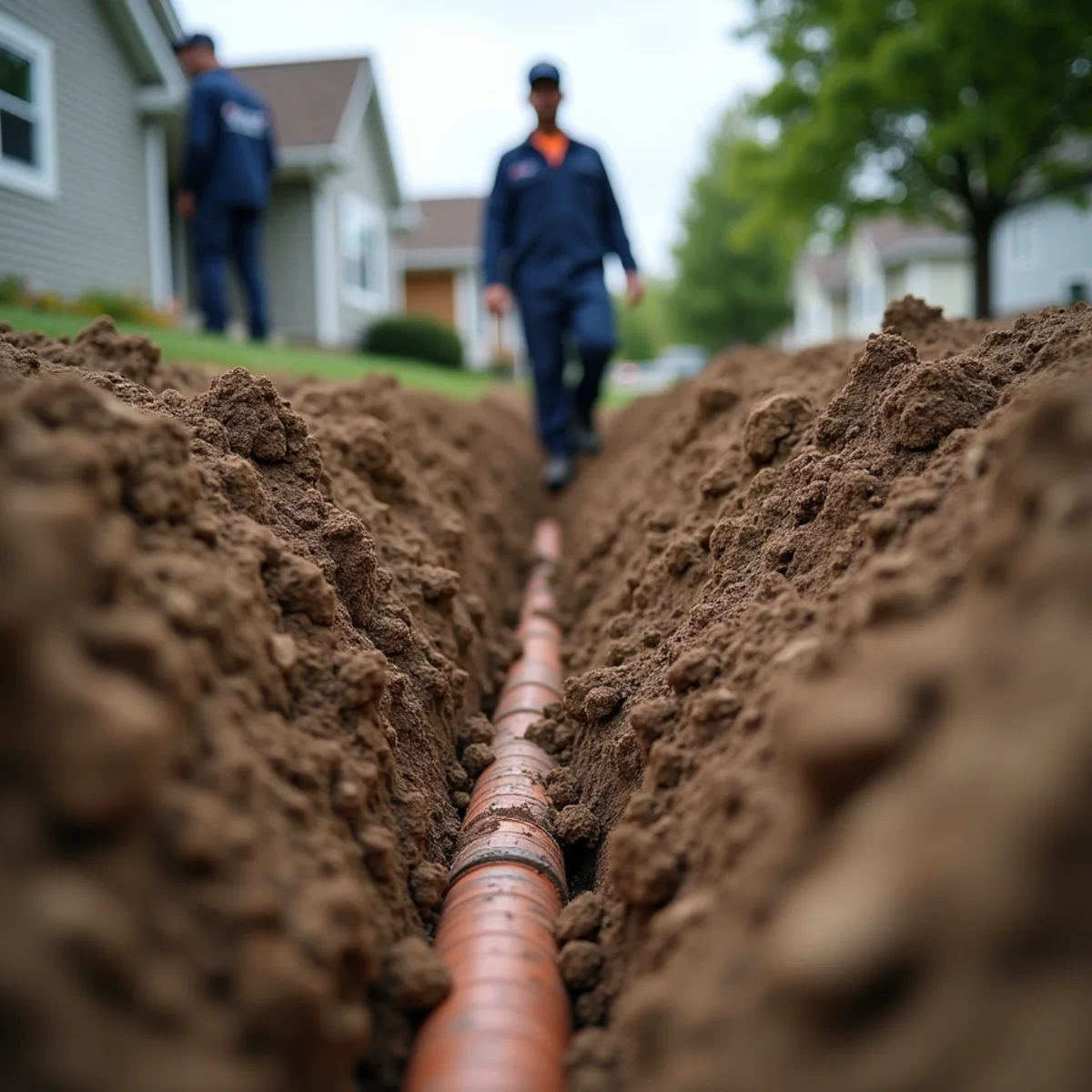
Almost every sewer problem we diagnose in this county traces back to the same thing, and it is not the pipe.
McHenry County sits on heavy glacial clay. It is why the farmland around here is productive, and it is why the sewer laterals underneath the houses fail in the specific ways they do.
Clay has one property that matters enormously to buried pipe: it changes volume with moisture. Wet clay swells. Dry clay shrinks and cracks. Do that seasonally for sixty years under a pipe made of short jointed sections, and something has to give.
Failure one: joints working open
Older laterals in this area were commonly built from clay tile in short sections, joined every few feet. Every one of those joints is a potential opening.
Seasonal soil movement works on them. Swell, shrink, swell, shrink. Not dramatically in any one year, but relentlessly. Eventually a hairline gap opens at a joint, and now warm, moist, nutrient-rich vapor is escaping into the surrounding soil.
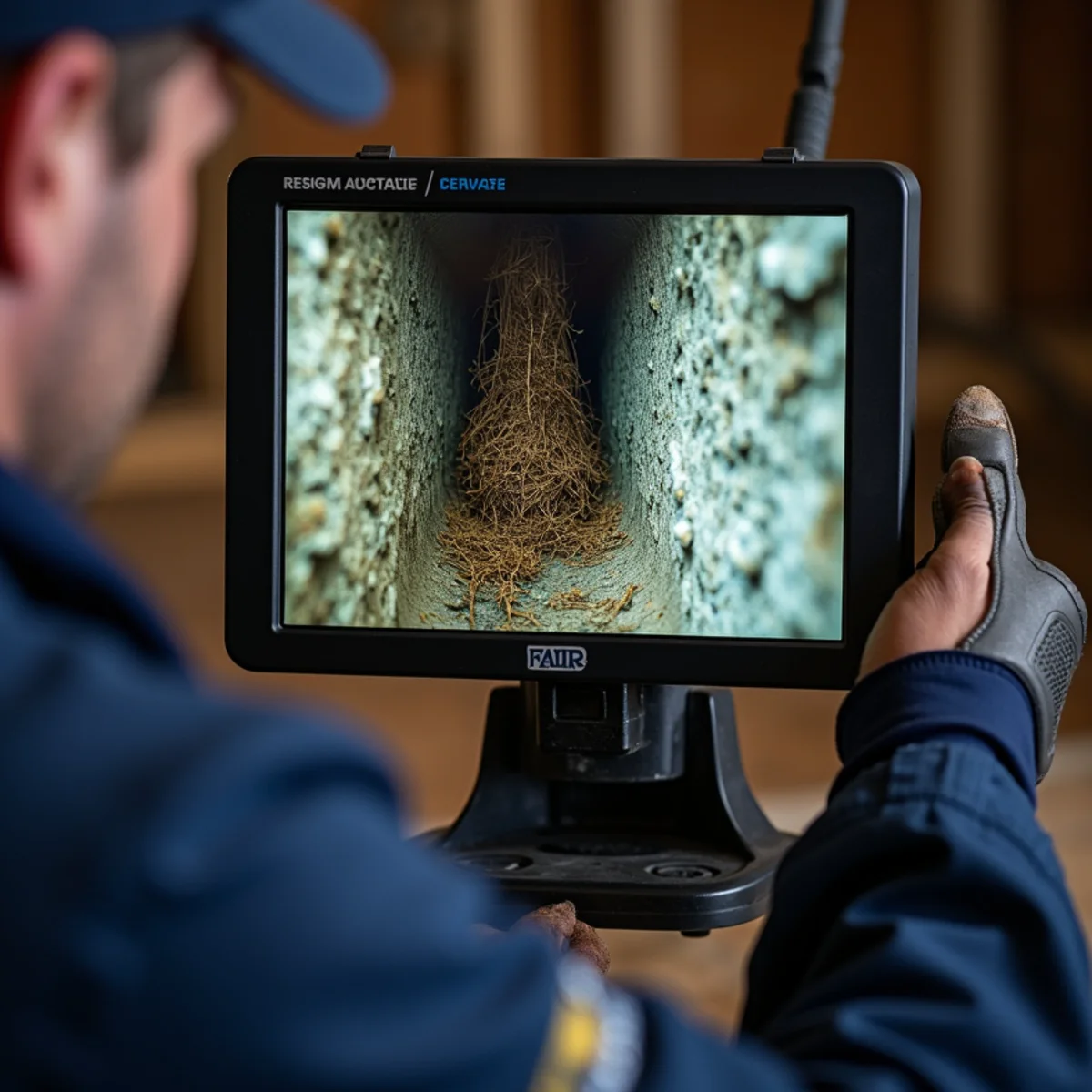
Roots grow toward exactly that signal. They enter as filaments finer than a hair, then thicken inside the pipe where conditions are ideal, forming a mat across the flow that catches everything sent past it. This is the single most common finding on our camera inspections in older neighbourhoods.
The important thing to understand is the order of events. The soil opened the joint. The roots found the opening. Cutting the roots does not close it, which is why they come back — and why our tree roots in sewer lines guide focuses on the joint rather than the tree.
Failure two: bellies
A belly is a low spot where a section of pipe has sagged below the intended grade. Water pools there instead of flowing through, and every solid that arrives settles into the pool.
Clay causes these two ways. Poorly compacted clay backfill in the original trench settles unevenly over years. And expansive clay under the pipe heaves and subsides seasonally, gradually deforming a run that started out straight.
The signature is a drain that clogs on a fairly regular schedule regardless of what the household does differently, and a camera that shows standing water in a section of otherwise sound pipe.
Bellies matter more than people expect, because they rule out the easiest repair. A cured-in-place liner follows the existing grade, so it preserves a low spot rather than correcting it. A belly has to be excavated and re-sloped. That is worth knowing before anyone sells you a liner as a whole-line solution — see trenchless sewer repair for where lining genuinely does apply.
Failure three: offsets and cracks
The more severe version of joint movement. Instead of a hairline gap, adjacent sections shift far enough apart to create a step in the flow path, or the pipe cracks outright under the stress.
Now soil is entering the pipe as well as sewage leaving it. The line silts up from inside, and the escaping water washes soil away from around the pipe — which removes support and accelerates the movement that caused it. It is self-worsening.
The surface tell is often visible: a stripe of unusually green or lush grass over the line where it is being irrigated and fertilised, or a soft, sunken depression where soil has washed away underneath.
What makes it worse locally
Three amplifiers specific to this area.
- The freeze-thaw cycle. Northern Illinois winters drive frost deep, and the expansion and contraction that comes with it adds to the seasonal soil movement clay already produces.
- Mature trees. Neighbourhoods planted in the 1960s and 70s in Crystal Lake, Cary and Woodstock now have root systems large enough to find any joint that has opened.
- Spring saturation. Clay does not drain, so the ground stays waterlogged for days after a melt or a heavy rain, which is the condition where soil movement and infiltration are both greatest.
- Pipe material and era. Clay tile laterals have joints every few feet. Cast iron corrodes from the inside and loses wall thickness. Modern PVC has neither problem, which is why homes built in the last thirty years rarely have structural lateral failures.
What you can actually do
You cannot change the soil, but the outcomes are manageable if you know what you are dealing with.
If your home predates about 1980 and you have never had the lateral looked at, a sewer camera inspection is the single most useful thing you can do. It costs a small fraction of a replacement and it tells you whether you have decades of life left, a joint to keep an eye on, or a problem forming.
If you have had backups more than once, stop paying to clear it and find out why. Two clearings on the same line is the point at which a camera saves money rather than costing it.
And manage the water. Downspouts extended well away from the foundation, grade sloping away from the house, and sump discharge carried far enough that it does not saturate the ground over the lateral. Keeping the soil around a buried pipe as stable as possible genuinely slows all three failure modes. Homeowners across Crystal Lake, Cary and McHenry deal with this same geology, and the ones who inspect early consistently spend less than the ones who wait.
Quick answers
Why do sewer lines fail in clay soil?
Clay expands when wet and shrinks when dry. That seasonal movement works on the joints of older jointed pipe until gaps open, causes uneven settlement that creates low spots, and in severe cases shifts sections far enough apart to crack them.
What is a belly in a sewer line?
A sagged section where the pipe has dropped below its intended grade, so water pools instead of flowing through. Solids settle in the pool and it clogs repeatedly. Importantly, a trenchless liner will not fix one — it follows the existing slope.
Can I prevent clay soil from damaging my sewer line?
Not entirely, but you can slow it. Keeping water away from the soil over the line helps — downspouts extended well clear, grade sloping away from the house, and sump discharge carried a genuine distance. Early camera inspection is the other half.
Need a hand with this?
Talk to the plumber who wrote this
We are a licensed, owner-operated shop on Pine Street in Lake in the Hills. Free written estimates on non-emergency work, and a real person answering the phone when it cannot wait.
- 5.0 from 11 Google reviews
- Licensed & insured
- 24/7 emergency service